A rising Pinterest trend can tell you that interest is growing. It does not tell you that your content belongs in that conversation, which audience will respond, or what someone expects after clicking.
Understanding the Pinterest taste graph helps connect those questions. Pinterest works with relationships between people, Pins, boards, queries, products and interests. Your strategy needs to consider the idea on the page, the person who might want it, and the moment that makes it useful.
For creators, the Pinterest Taste Graph matters because Pinterest is not only trying to identify what a Pin is about. It is also trying to understand which people may find that idea relevant based on their interests, context and behaviour.
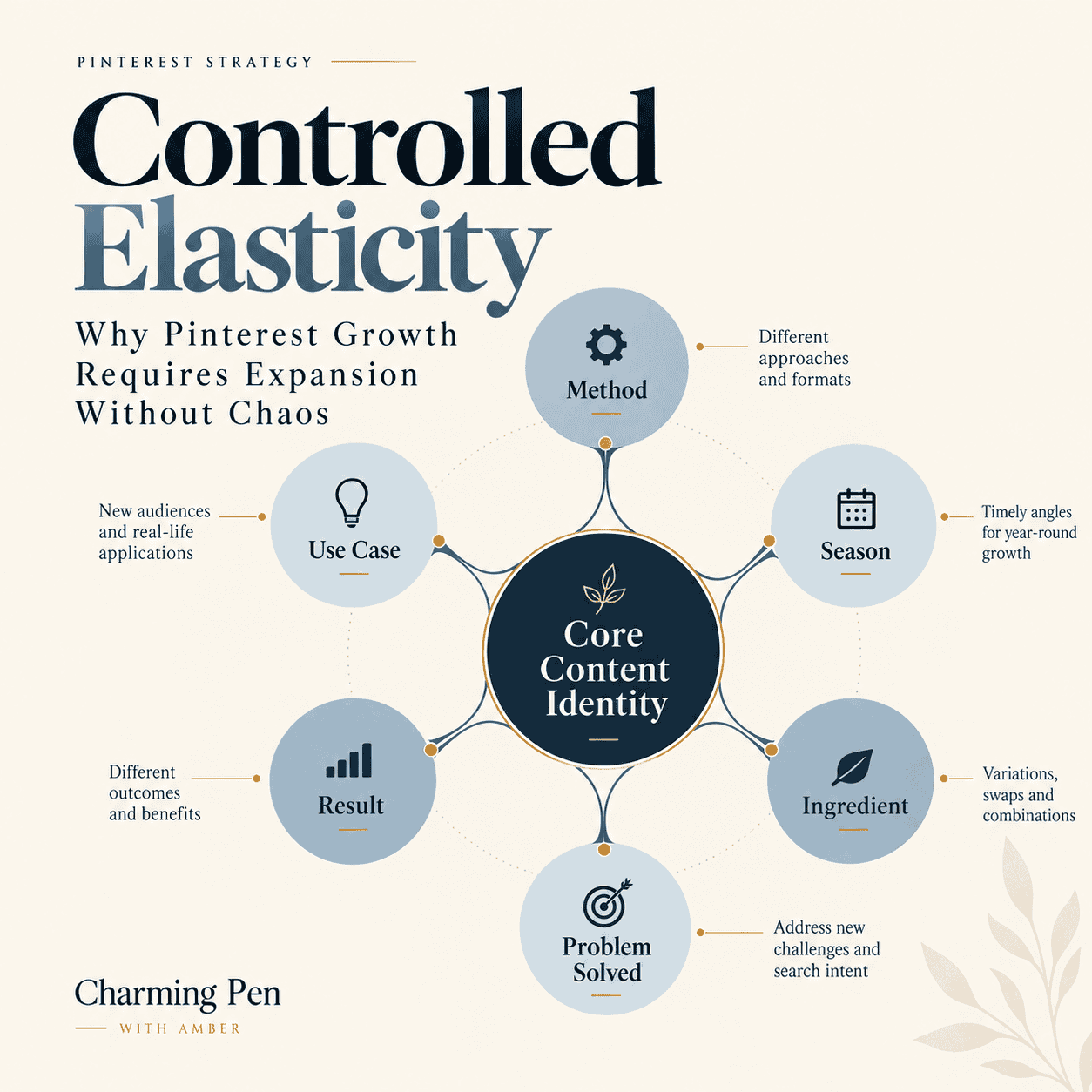
That means your Pinterest strategy should preserve the content’s core identity while presenting truthful angles that matter to different audiences.
As a Pinterest strategist, I use trends to choose relevant ways into content. A seasonal angle, practical use case or different visual treatment can introduce an existing article to another audience. The promise still needs to match what the article delivers.
What Is the Pinterest Taste Graph?
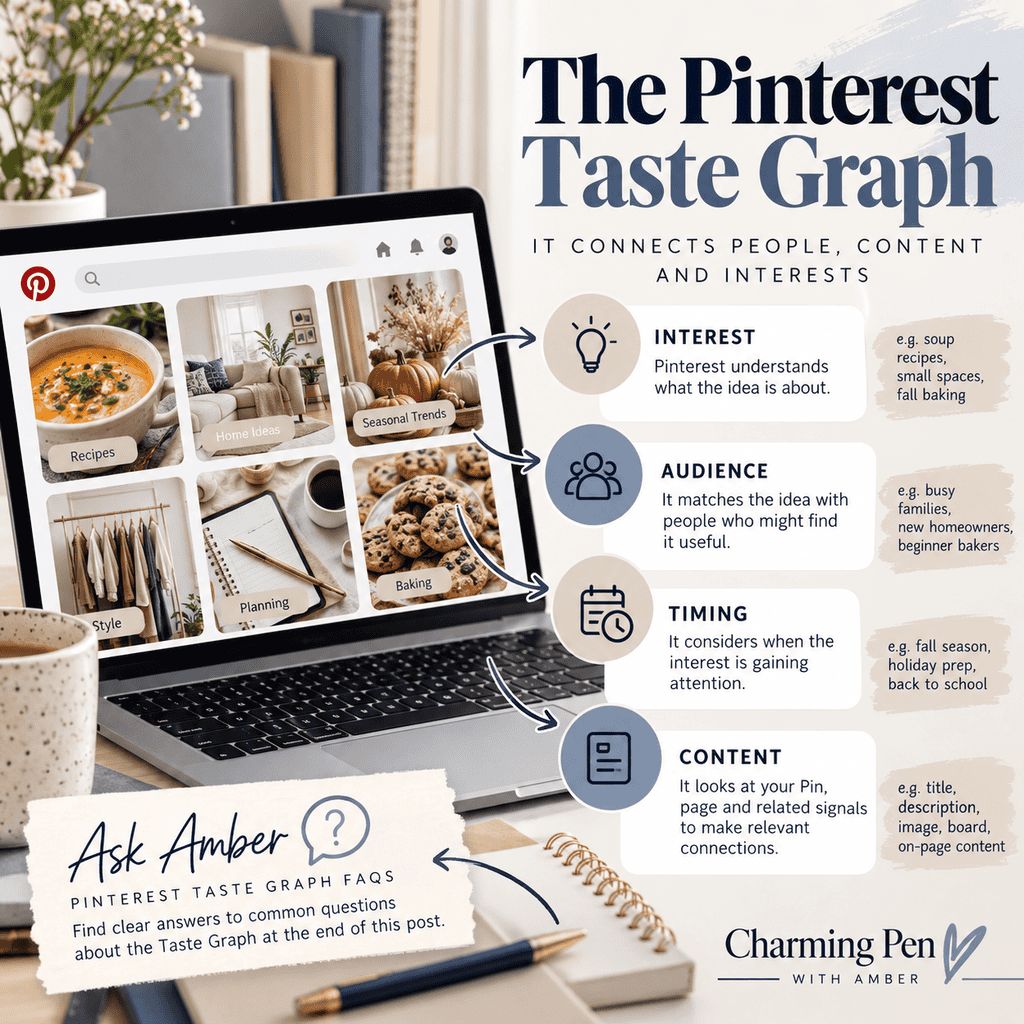
The Pinterest Taste Graph is the network of relationships Pinterest builds between people, Pins, boards, searches, products and interests. Those relationships help Pinterest understand taste, context and intent so it can make more relevant recommendations.
Pinterest Engineering’s original explanation of the Taste Graph described three foundational components: Pins, users and interests. That 2017 explanation is useful for understanding where the concept came from, but Pinterest’s current systems extend beyond that early model.
More recent Pinterest material describes a much larger network of relationships built from activity across Pins, boards, queries, products and people. Pinterest also continues to connect taste and discovery with signals created through saving, searching and interacting with content.
For creators, the useful question becomes:
What makes this particular idea relevant to this particular person?
A blue room might appeal because of its colour, its small-space layout or its coastal styling. A soup recipe might appeal because it uses pantry ingredients, suits a cold evening or can be made ahead.
Those are different reasons to care about the same piece of content.
Content Identity and Audience Appeal Are Different Questions
I separate two decisions in my work:
- What is this content? Identify the recipe, product, tutorial or problem the page actually addresses.
- Who would find it useful, and why? Choose a supported benefit, context or visual approach for that audience.
This is my planning distinction, not a claim that Pinterest divides its systems into these two exact steps.
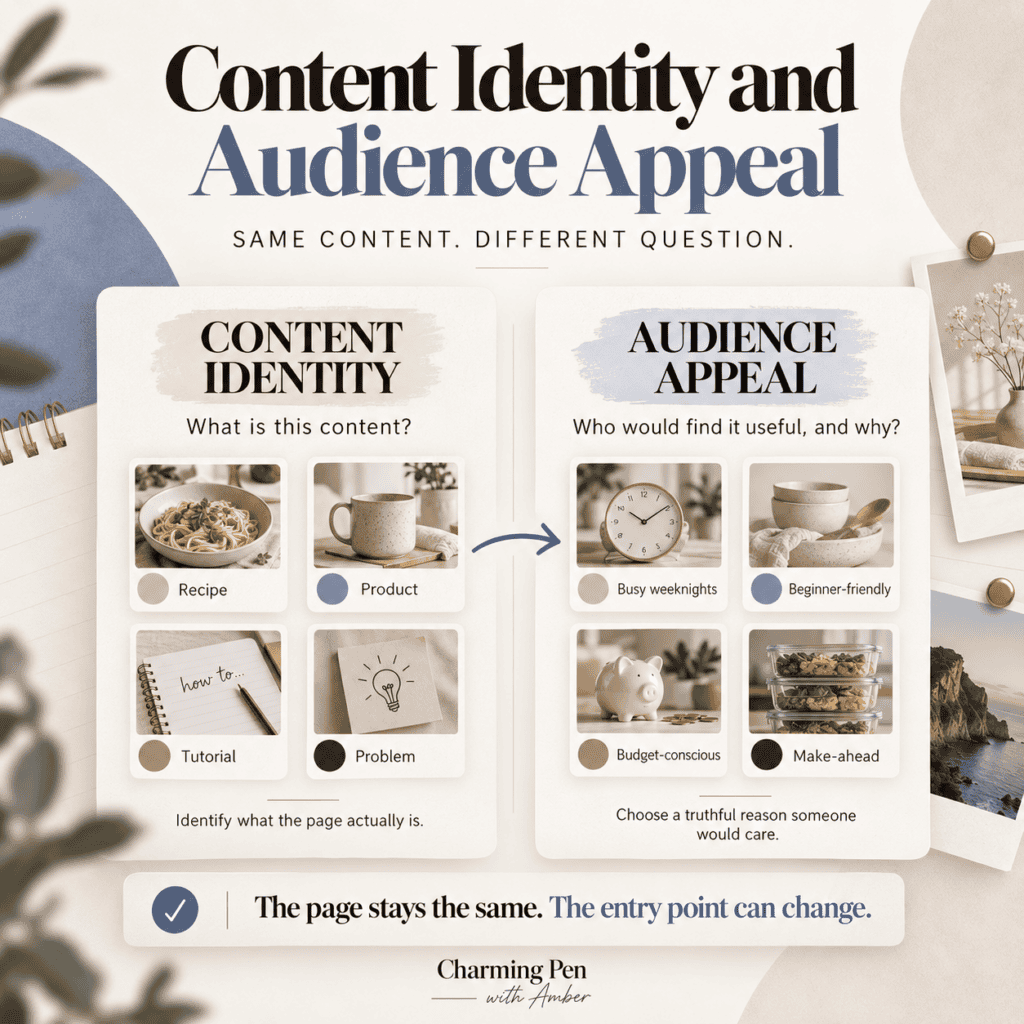
Consider a beginner guide to painting a small bedroom.
Its identity stays the same.
One Pin could emphasize choosing a colour for a small room. Another could emphasize the beginner painting process. A third could emphasize the budget, if the guide includes a realistic cost breakdown.
The audience angle changes. The page still needs to fulfil every promise.
Tony Hill has discussed home feed uniqueness and audience variation, encouraging creators to think about different people and user journeys when developing Pins for a post.
My practical addition is to check every variation against the source.
Changing the hook should reveal another useful part of the content. A different colour or font alone does not necessarily create a different reason to click.
How Does the Pinterest Taste Graph Affect Your Content Strategy?
The Taste Graph changes how useful it is to think about content distribution.
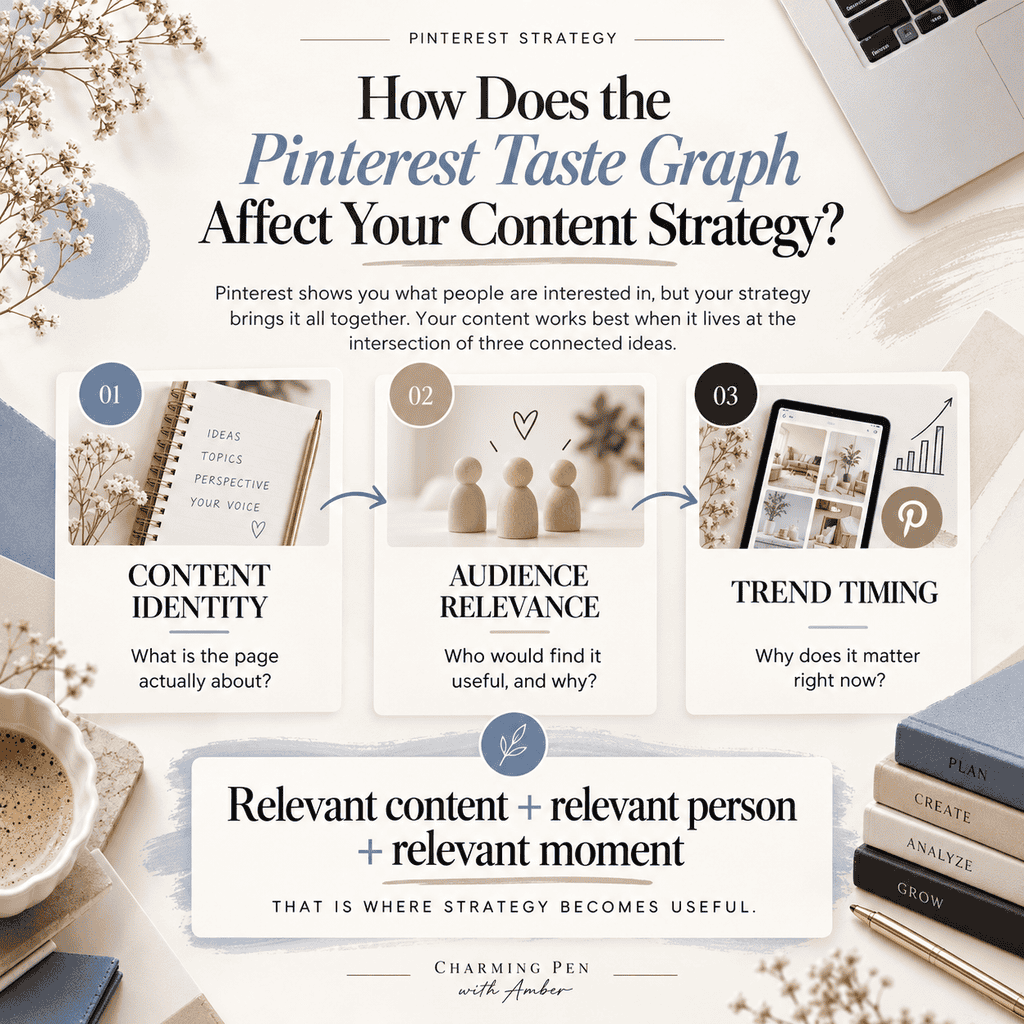
Instead of asking only:
What keyword describes this article?
you can also ask:
What supported reason would make this article useful to a particular audience right now?
This is where trend research becomes useful.
A trend adds a timing question:
Which relevant interest is gaining attention now?
Pinterest Trends can help you explore that movement. Pinterest’s Trends documentation explains regional data, seasonal patterns and search, save and shopping trends. Availability varies by feature and region.
I find it useful to keep three types of evidence separate:
| Evidence | What it helps you understand |
|---|---|
| Search terms and results | What people are looking for and what the results appear to promise |
| Trend movement | When interest is growing, recurring or declining |
| Your account’s response | Whether your Pins attract saves, visits or other meaningful actions |
Pinterest Trends indexes search interest on a 0–100 scale. A value of 100 represents the term’s highest point in the displayed comparison. It does not mean 100 searches.
Check normalization settings when comparing terms.
A large percentage increase can also start from a small base. Record the region, date range and measurement before deciding that a rising term deserves your next article or Pin.
Use Pinterest Trends to Find Timely Audience Interests
A rising trend is useful only when your content can genuinely serve the person behind the search or interest.
Before using a trend, I ask three questions:
- Does the page support the exact meaning?
- Would the audience reasonably want this content?
- Is there still a useful window to publish?
Here are a few examples across niches.
| Existing content | Possible trend connection | What the page must support |
|---|---|---|
| Vegetable soup recipe | Fall dinner ideas | A recipe that fits that meal context |
| Small living room guide | Autumn room refresh | Relevant styling ideas without implying a full renovation |
| Beginner sewing tutorial | Handmade gifts | A finished project suitable for gifting |
| Capsule wardrobe article | Transitional outfits | Outfits and layering advice for changing temperatures |
| Business planning checklist | Starting a business | Concrete planning steps for that stage |
| Post-divorce support article | Starting over | Guidance that addresses that transition accurately |
A seasonal label cannot supply missing instructions.
A general bedroom article does not become a DIY wall-panelling tutorial because wall panelling is popular.
When a trend requires substantial new information, create or update the article before making the Pin.
Use Trend Research to Make a Decision
Trend research should influence the work while the opportunity is useful.
Collecting a rising keyword and then producing the same generic Pin wastes the insight.
Kate Ahl’s Simple Pin Podcast episode on creating content from Pinterest Trends demonstrates using trend searches, resulting Pins and seasonal timing to develop content ideas.
The useful intersection with my approach is that the results help reveal what people expect to find.
My next step is to compare that expectation with the content I already have.
Can an existing article satisfy it?
Does the article need an update?
Or does the opportunity require a separate article?
For an existing page, a compatible trend can affect the next Pin’s emphasis, wording, imagery and relevant board placement.
Choose the part of the page that matters in that moment and make it easy to recognize.
Give Each Pin One Clear Entry Point
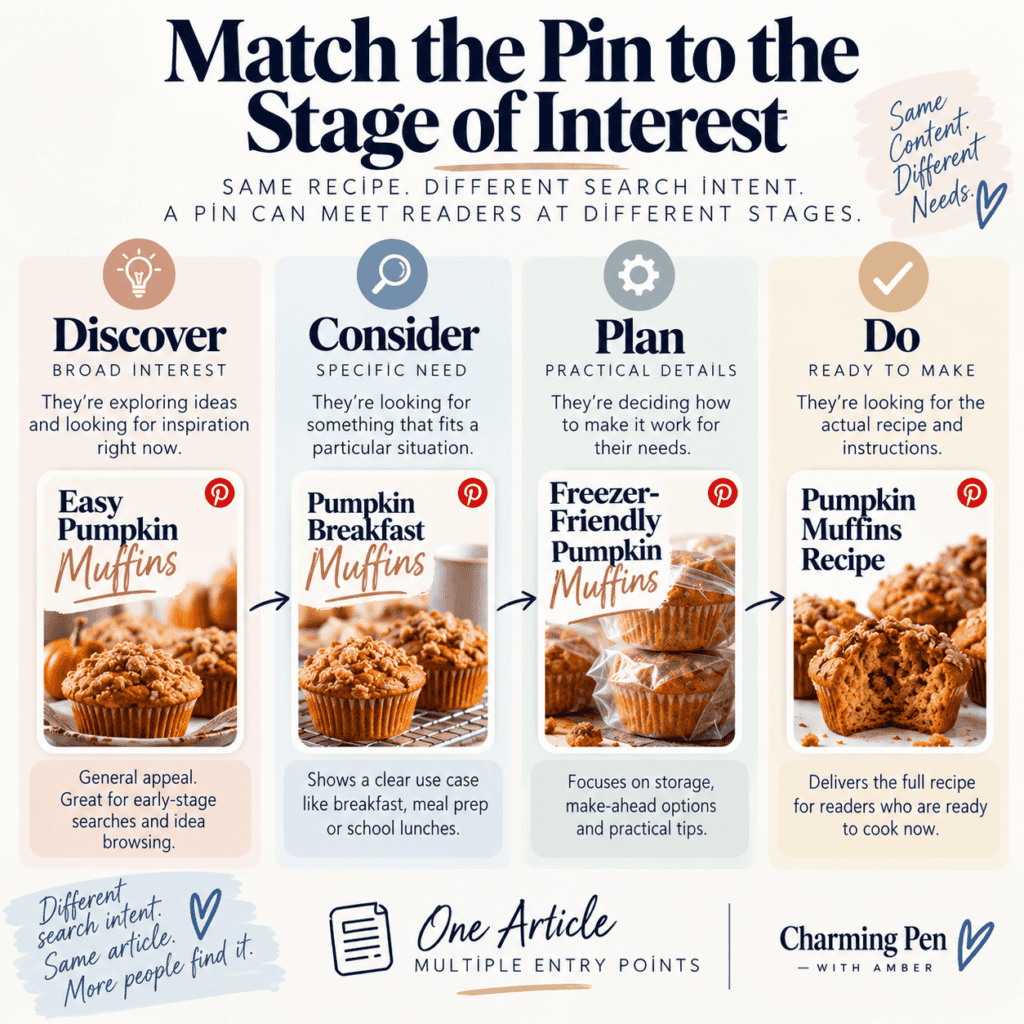
One article can have several truthful entry points.
Each Pin benefits from one clear main promise.
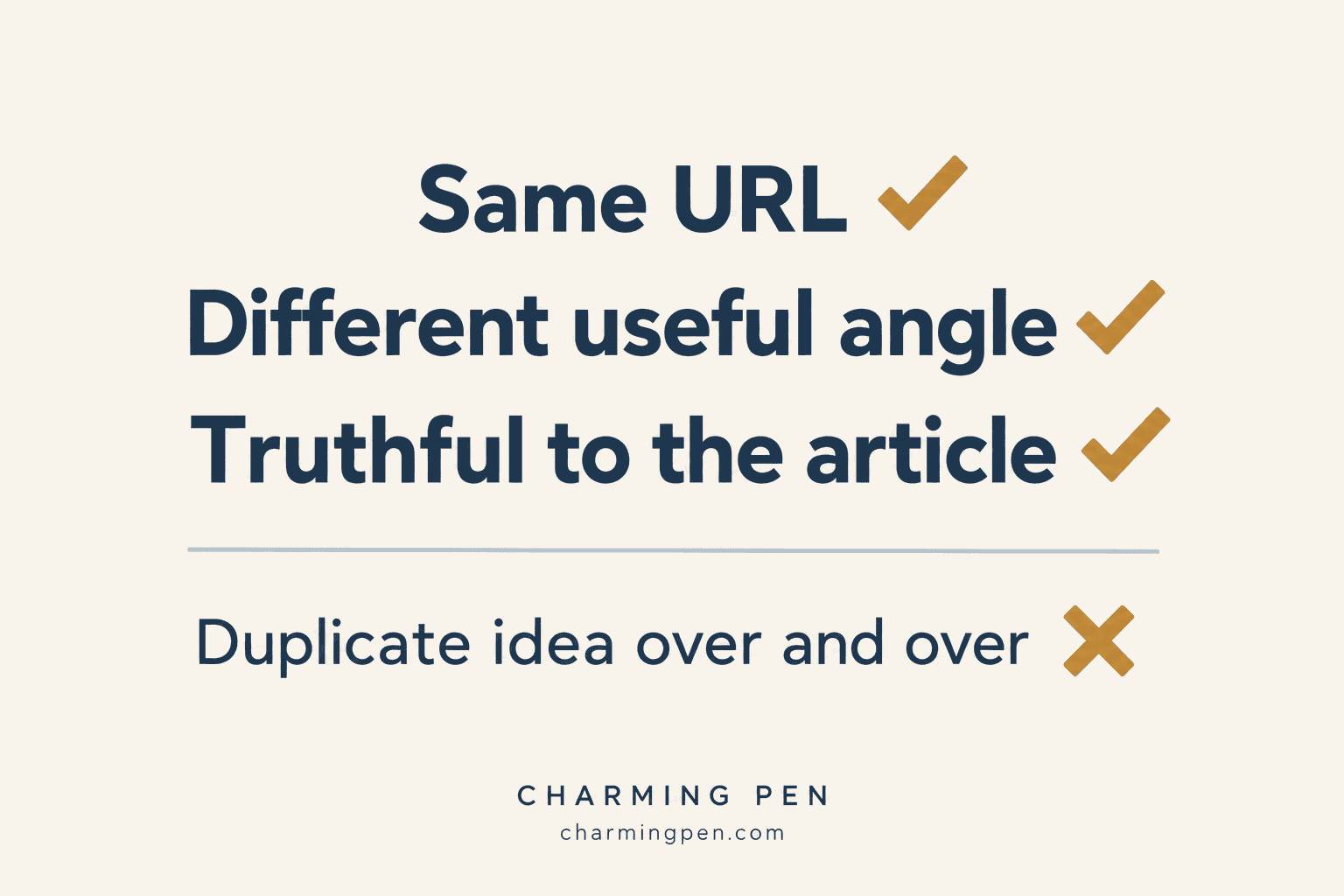
For example, a tomato sauce article might support:
- an ingredient angle
- a roasting-method angle
- a freezer-storage angle
The freezer Pin should explain the storage benefit while still clearly identifying tomato sauce.
It does not need to crowd in every seasonal, dietary and meal-prep phrase found during research.
This is where I use the idea of controlled elasticity: vary the emphasis within the content’s actual boundaries.
Controlled elasticity is a working strategy, not an official Pinterest ranking rule.
A useful structure is:
Content identity → specific modifier → practical context → reason to click.
For a small-room tutorial, that might become:
small bedroom painting guide → beginner-friendly → weekend project → materials checklist
Modifiers carry information.
“Small bedroom,” “no-sew” and “make-ahead” tell someone something concrete.
“Amazing” and “must-see” leave much more of the decision unanswered.
Related Pins Offer Clues, Not Access to a Private Graph
Related Pins and search suggestions can reveal nearby ideas worth investigating.
They cannot show you a complete Taste Graph for a creator, URL or audience.
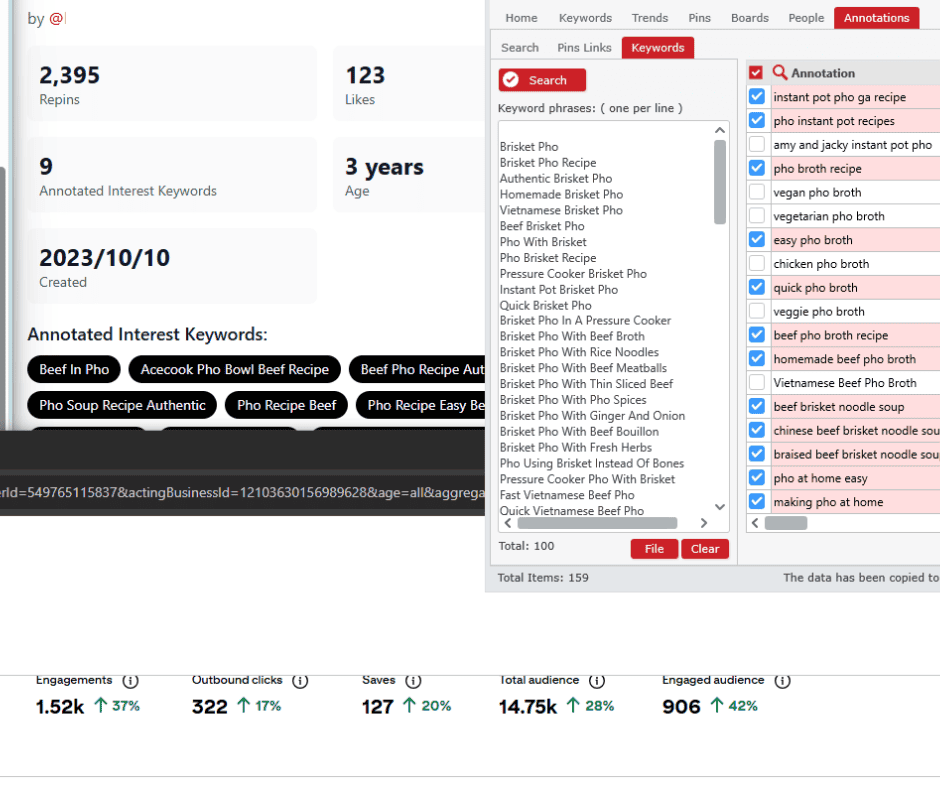
In my research, I call the concepts visible around a Pin its Related-Pin Interest Neighborhood.
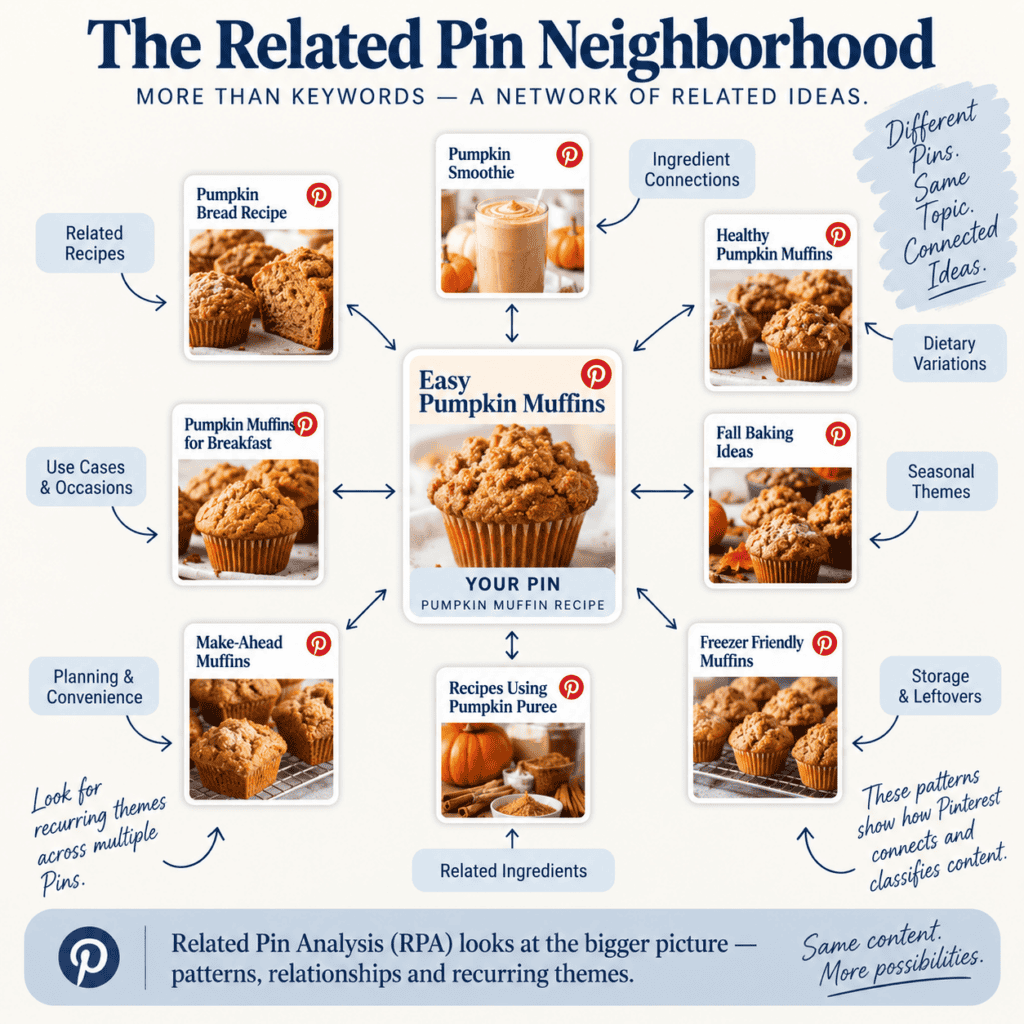
This keeps the observation separate from assumptions about Pinterest’s internal systems.
If several neighbouring Pins emphasize freezer preparation, that gives me a research lead.
I still need to check:
- whether people are looking for that angle
- whether it fits the article
- whether the article contains reliable storage instructions
Tailwind’s explanation of Pinterest SEO signals also distinguishes related interests, search suggestions, trends and other evidence.
My guardrail is to treat suggestions as leads.
A suggested phrase is worth investigating. It is not an automatic instruction to add that phrase to every title and description.
Apply the Idea to Existing Content Before Chasing a New Topic
One useful example from my own blog came from the response to a “meals that stretch” Pin.
Its saves gave me a reason to investigate the practical need behind the wording: people looking for food that goes further.
That observation can guide questions about:
- portions
- ingredient reuse
- leftovers
- batch cooking
- meal planning
It does not prove why every person saved the Pin or guarantee that a related article will succeed.
The same principle applies in other niches.
A Pinterest management article could speak to a business owner deciding whether they need help, while a different article could guide a new Pinterest manager setting up a workflow.
The broad topic is similar.
The reader’s need is not.
Match the Pin to the Stage of Interest
Someone collecting inspiration may want possibilities.
Someone ready to act needs details.
“Autumn living room ideas” and “how to arrange furniture in a narrow living room” suggest different tasks.
A mood-board image may suit the first.
A layout demonstration may better serve the second.
Similarly, a save can mean:
I want to remember this for later.
An outbound click may indicate:
I want the instructions now.
Neither action explains a person’s full intent on its own.
The published summary of Pin Talk episode 11 with Tony Hill and Carly Campbell also raises the distinction between content that attracts saves and content that attracts clicks.
That intersects with my view that the intended reader action should influence both the Pin promise and how we evaluate the result.
When planning a content cluster, ask what would help the reader next.
A sewing project could naturally lead to:
- choosing fabric
- learning a stitch
- finishing an edge
Create those pages when they answer real questions, and link them where they genuinely help.
Measure Whether the Trend Angle Helps
Keep a simple record of:
- page
- Pin angle
- trend evidence
- publication date
- intended result
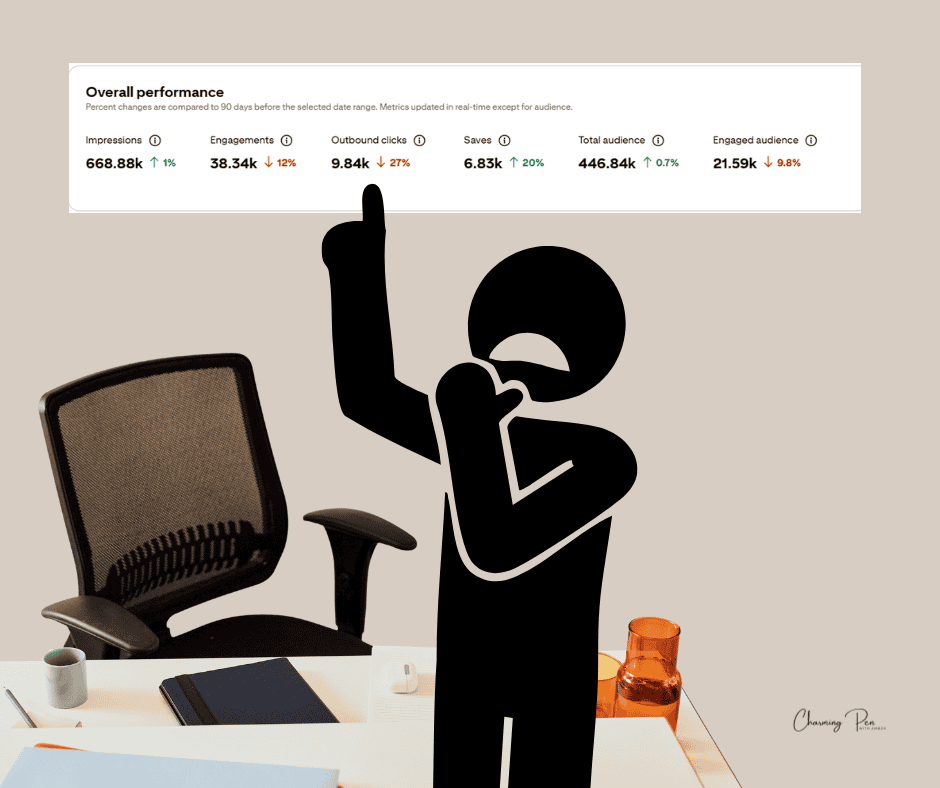
Review impressions for exposure, saves for bookmarking behaviour and outbound clicks for visits to your site.
Compare rates as well as totals.
Use similar reporting windows and compare Pins of similar ages whenever possible.
Where you can, also check the quality of those visits and whether people take the action you wanted after clicking.
Changing imagery, wording, board and publication timing all at once makes it difficult to identify what caused a difference.
Small, deliberate tests make the findings easier to interpret.
Relevance improves the case for reaching an audience.
It does not guarantee distribution.
Competition, timing, presentation and user response still matter.
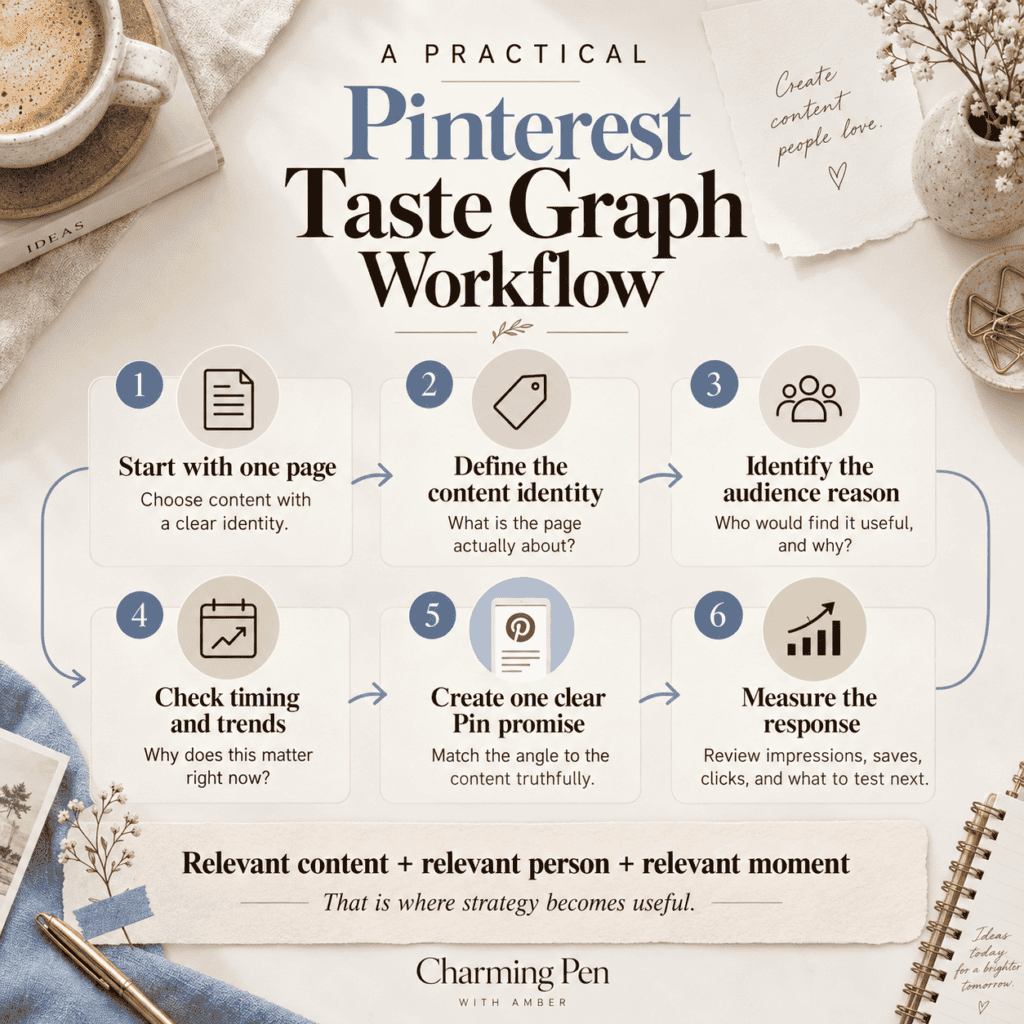
A Practical Pinterest Taste Graph Workflow
You do not need to map Pinterest’s entire recommendation system to use this idea.
Start with one page.
Identify its core content identity.
Then look for one supported audience reason that becomes especially useful because of timing, seasonality or changing interest.
Ask:
- What is this page actually about?
- Who could find it useful?
- Why would they care now?
- Does the source fully support that angle?
- Can the Pin communicate that reason clearly?
- What result will tell me whether the angle worked?
That is the practical value of thinking in terms of the Pinterest Taste Graph.
You are not trying to force your content into every growing topic.
You are looking for truthful intersections between what your content offers, what people care about and when that interest becomes useful.
Start with one page that has a clear identity. Find one supported angle that fits a useful trend window. Make the Pin promise recognizable, fulfil it on the page, and use the response to decide what to test next.
You Asked, Amber Answers
Pinterest advice can get complicated fast. Here are my quick answers to a few of the most common questions around this topic.

Yes—this image was made with AI. As a small business owner wearing a lot of hats, I don’t always have the time to arrange a professional photo shoot, so this is one way I create polished visuals for my business.