If you’ve ever worked in SEO, you already understand what a SERP is.
You know the effort it takes to reach page one.
You know that ranking briefly isn’t the same as holding a position.
And you know that meaningful traffic comes from stability, not short-lived visibility.
What most people don’t realize yet is that Pinterest has SERPs too.
And right now, many Pinterest strategies stop one step too early — at keywords and annotations — without accounting for what actually determines whether Pinterest continues to surface content or quietly phases it out.
This gap between ranking and traffic is where most Pinterest momentum is either built or lost.
Pinterest Is a Search Engine — Just Not a Traditional One
Pinterest may describe itself as a visual discovery platform, but functionally it behaves much more like a search engine than a social network.
People search with intent.
They scan results.
They choose what best satisfies their need in that moment.
Where Pinterest differs from Google isn’t whether SERPs exist — it’s how those SERPs behave.
Pinterest SERPs are:
- Visual-first
- Continuously refreshed
- Influenced by engagement, recency, and competitive pressure
- More fluid than Google’s, but not random
This means that seeing a pin rank highly for a keyword doesn’t mean it has “won.”
It means Pinterest has begun testing it.

Why Ranking Alone Is a Misleading Metric on Pinterest
A common experience looks like this:
A pin appears near the top of results.
It holds for a few days or a week.
Then it drops.
Then it reappears.
Then it disappears again.
This cycle often leads people to assume something went wrong.
In reality, Pinterest is doing exactly what it’s designed to do.
Pinterest doesn’t reward content for ranking once.
It rewards content that earns its position over time.
Volatility isn’t failure — it’s evaluation.
The mistake happens when strategy stops at:
“Am I ranking?”
Instead of moving to:
“Am I holding position within a SERP?”
That distinction changes how you interpret everything Pinterest shows you.
Annotations Help Pinterest Understand Content — SERPs Decide Whether It Stays
Keywords, annotations, titles, and descriptions are essential. They tell Pinterest what your content is about.
But once Pinterest understands your content, a different process begins.
Pinterest starts evaluating:
- Are users interacting with this pin?
- Are they saving it?
- Are they clicking?
- Does it still satisfy intent better than newer pins?
- Is it visually competitive in the current feed?
- Does it hold relevance as more content enters the SERP?
This is where many strategies quietly stop.
They focus on feeding Pinterest information — but not on responding to how Pinterest is reacting.

The Tracking Layer Most People Don’t Go Into (And Why)
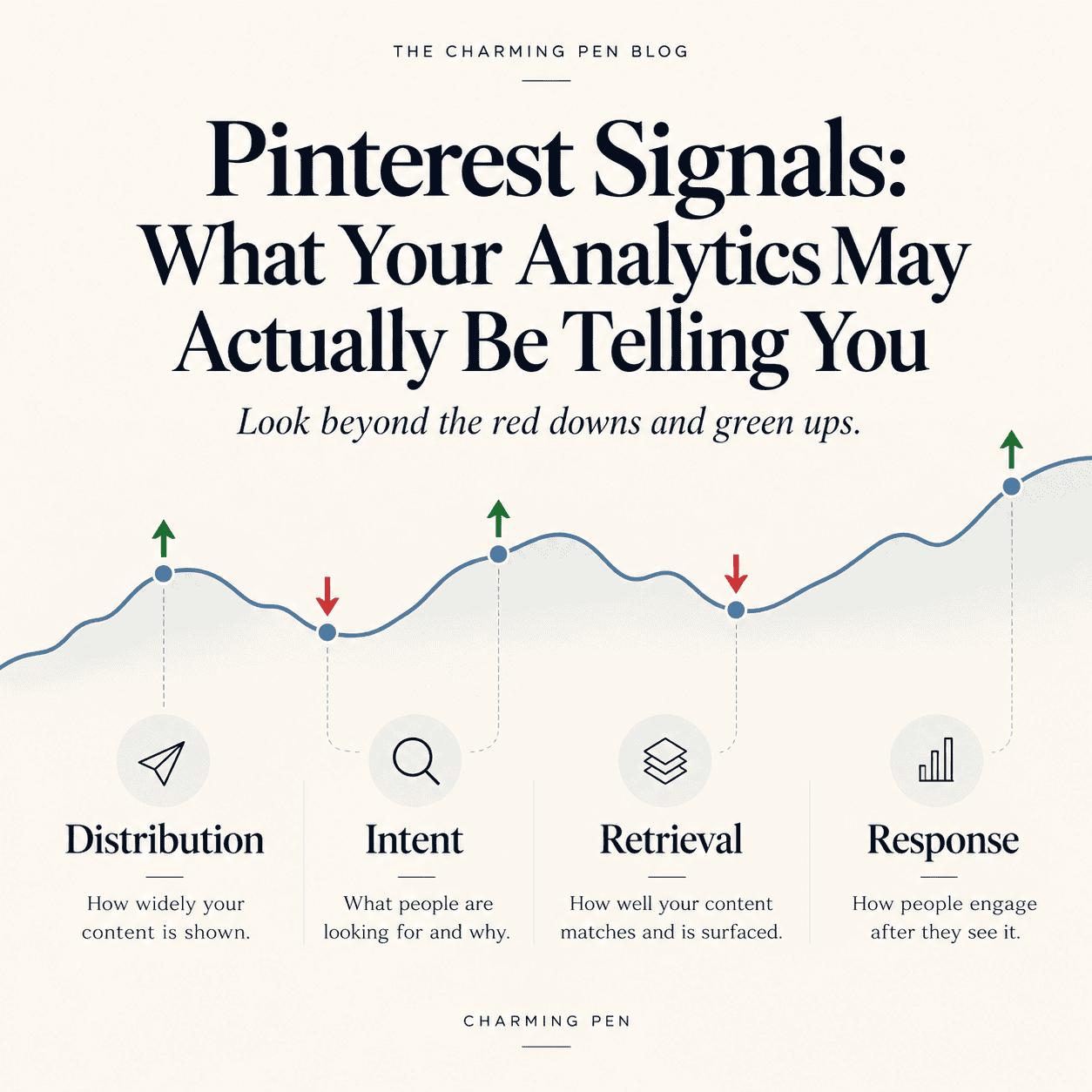
Responding to Pinterest’s signals means tracking SERP behavior over time — watching how long pins hold position, noting what causes drops or re-entries, and adjusting based on what Pinterest continues to reward.
This level of tracking creates a significant amount of minutiae, and it’s where many strategies naturally stop. Not because it isn’t important, but because ongoing SERP monitoring requires time, attention, and interpretation that most people aren’t willing or able to take on.
If you’ve hired a strategist, this is typically where you’d expect them to step in. Not just to get content indexed, but to monitor how Pinterest is testing it, how it behaves inside SERPs, and whether it’s earning continued visibility.
That said, this depth isn’t necessary for every account.
For newer accounts, SERP monitoring can be valuable because it helps establish strong early signals that teach Pinterest how — and how quickly — to distribute future content. For long-established accounts, much of that groundwork is already in place. In those cases, SERP tracking often matters less because the account has already earned trust and stable placement.
This is also why strategist-led Pinterest work requires more time and interpretation. It isn’t just about creating pins or adding keywords — it’s about deciding when deeper tracking is worth the effort and why.
The goal isn’t to suggest everyone should work this way — it’s to make visible what this layer of strategy actually involves.
SERP Stability Is the Signal That Matters
Traffic on Pinterest doesn’t come from momentary visibility. It comes from accumulation.
Healthy SERP behavior looks like:
- Pins reappearing consistently for the same searches
- Impressions building instead of resetting
- Gradual movement within result sets instead of disappearance
- Pins surfacing across multiple related search pages
These signals matter more than short-lived top rankings.
This is why stability, not peak position, is the metric that matters.
Competition, Recency, and Why Entry Points Matter
In saturated niches — food, lifestyle, ecommerce, business — SERPs are under constant pressure.
New pins are published daily.
Design trends shift.
User expectations evolve.
This makes entry points critical.
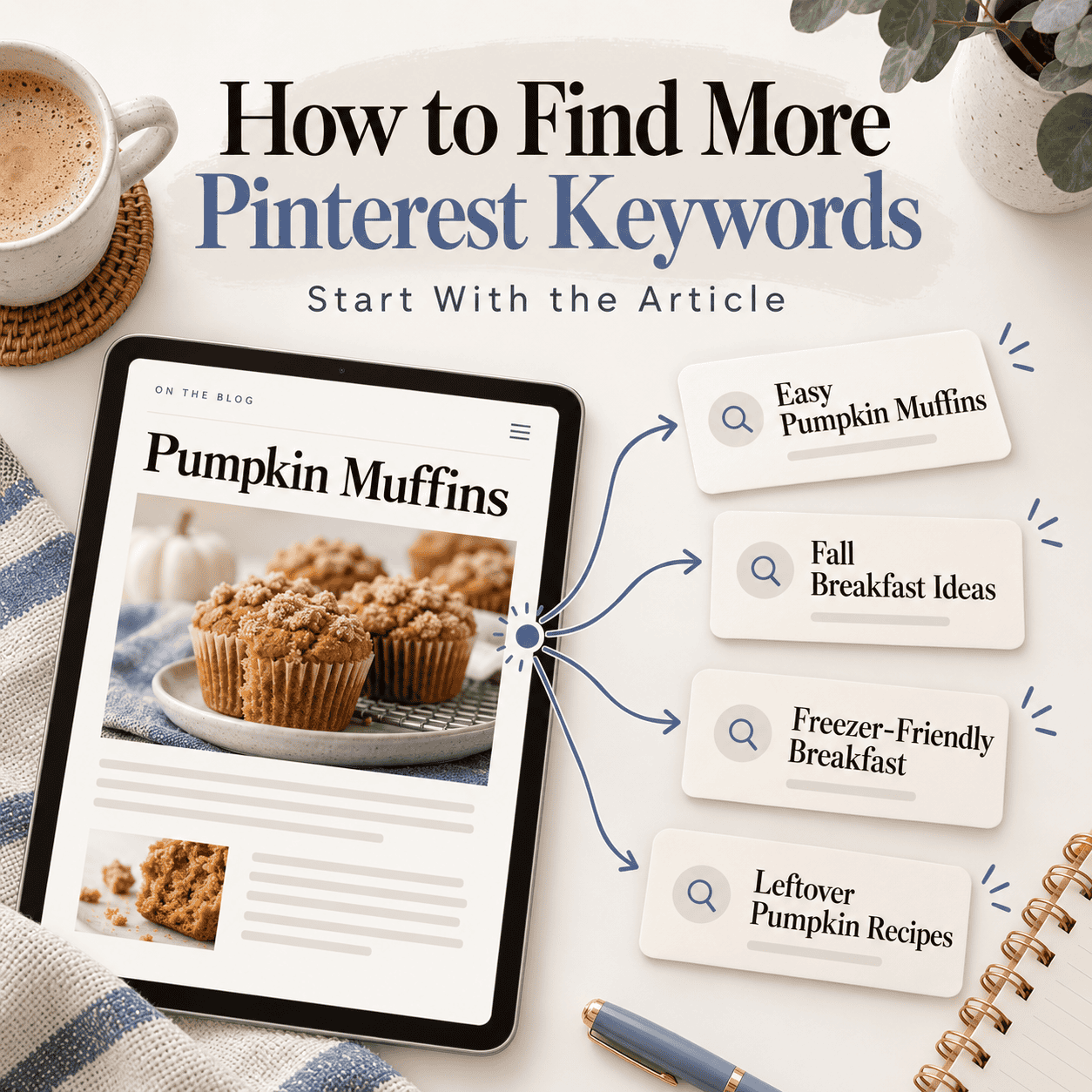
It’s not enough for Pinterest to understand what a piece of content is about. The more strategic question is: what other searches could this same content satisfy?
You might describe a recipe as a “chicken thigh dinner,” and Pinterest may understand that perfectly. But if you stop there, you limit how many SERPs that content can enter. Strategic positioning comes from identifying adjacent phrasing, secondary intent, and narrower long-tail searches that the same content legitimately satisfies.
Those secondary SERPs may only receive a few dozen searches a month — but ranking in the top positions of several smaller SERPs compounds. Twenty searches here, thirty there, added to multiple existing placements, quickly becomes meaningful traffic.
When a pin consistently appears across multiple related SERPs, Pinterest receives repeated confirmation that the content satisfies intent — which is exactly what leads to longer hold times and greater stability within each individual result set.

Why Long-Tail SERPs Hold Longer
Short-tail keywords trigger aggressive testing.
They offer high exposure — and fast displacement.
Long-tail SERPs behave differently:
- Narrower intent
- Less visual competition
- Greater stability once relevance is proven
Long-tail keywords don’t just help pins rank — they help them stay ranked.
This is why some pins quietly accumulate impressions over months while others spike and vanish.
Pinterest isn’t favoring one strategy over another.
It’s rewarding content that consistently satisfies intent with less friction.
The Strategic Shift Most Pinterest Approaches Haven’t Made Yet
Many Pinterest strategies are optimized for being picked up.
Fewer are optimized for staying visible.
Once a pin begins appearing consistently, the strategic question changes from:
“What keyword should I use?”
to:
“Why is Pinterest continuing to test this — or why did it stop?”
That shift leads to very different actions:
- Visual refinement instead of volume increases
- SERP monitoring instead of constant publishing
- Prioritizing proven content instead of treating everything equally
This is where Pinterest stops being a posting platform and becomes an ecosystem.
Pinterest SERPs Are Where Traffic Is Earned
Traffic doesn’t come from ranking once.
It comes from earning repeated placement.
Pinterest SERPs are fluid, but not chaotic. They reward relevance, clarity, engagement, and staying power over time.
Understanding SERPs explains:
- Why some content compounds
- Why some content stalls
- Why more pins aren’t always the answer
And most importantly, it helps you stop chasing visibility — and start building presence.
Final Thought
Pinterest SERPs are not just places where content appears.
They are living result sets where Pinterest continuously tests relevance, evaluates engagement, and decides how content should be distributed over time.
Ranking earns you entry. SERP stability determines where your content fits, how long it holds, and whether it compounds into meaningful traffic.