If you’re here because your Pinterest traffic is dropping, you’re not alone — and it’s rarely because you suddenly did something wrong.
Traffic drops happen to food bloggers, creators, and businesses at every stage. Sometimes it’s seasonal. Sometimes it follows an algorithm shift. Sometimes it seems random. But in most cases, the problem isn’t effort, consistency, or content quality.
It’s structural.
When Pinterest Traffic Is Dropping, It’s Usually a Signal Problem
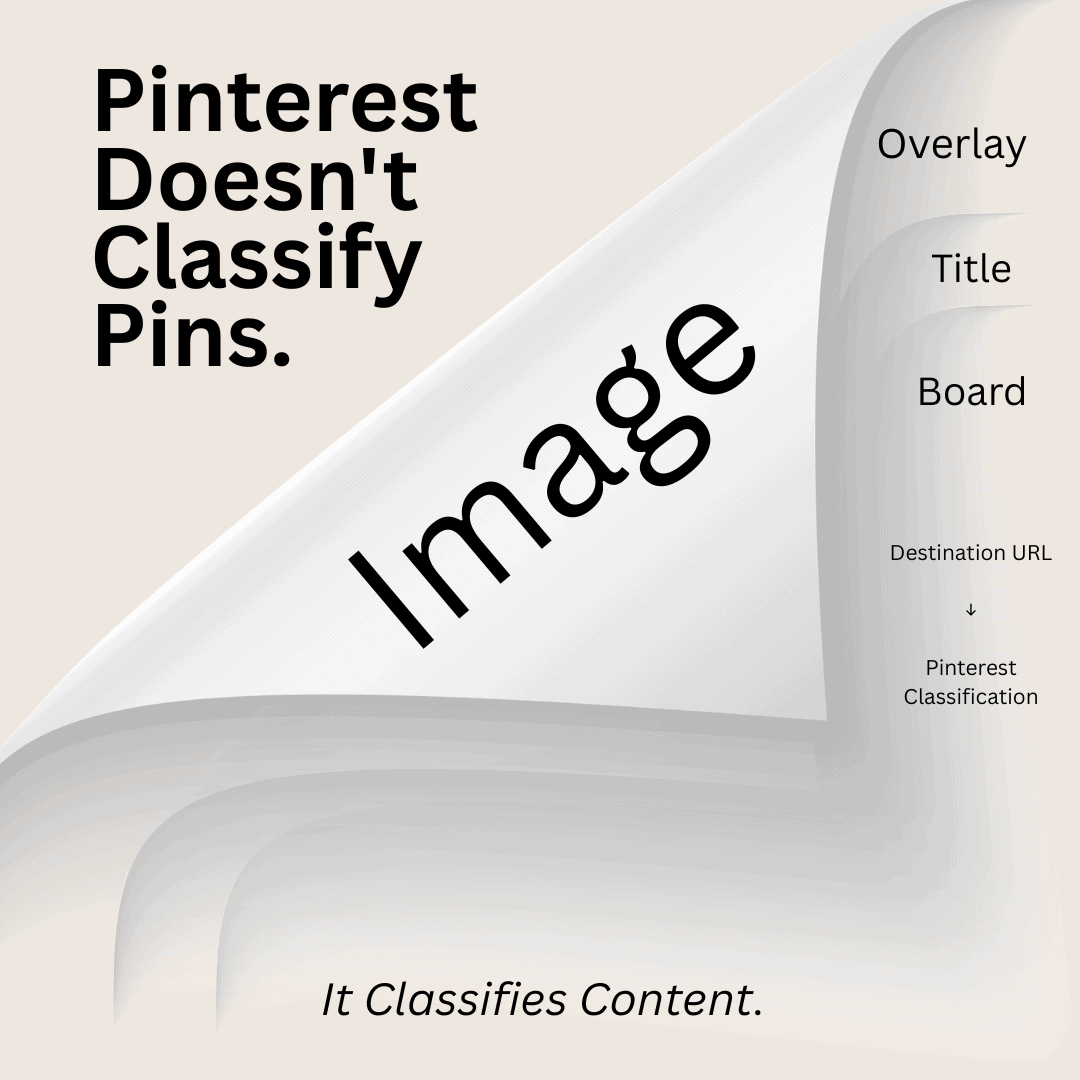
Pinterest responds to clarity.
When content is easy to interpret, it circulates.
When interpretation becomes uncertain, distribution thins.
During high-demand periods, the system tolerates broader signals. As conditions tighten — seasonally or algorithmically — Pinterest becomes more selective about where and how it places content.
That’s why Pinterest traffic dropping often feels sudden. The environment changed, and strategies that depended on momentum rather than structure lost footing.
Multiple Pins, One Interpretation
Most Pinterest accounts don’t struggle because they only create one pin.
In fact, most creators publish multiple pins for the same URL.
The issue is more subtle: many of those pins are built around the same underlying interpretation. Even when images change, the message doesn’t.
Often, those pins:
- use nearly identical descriptions
- target the same keyword cluster
- try to speak to multiple audiences at once
- rely on the same discovery logic
So while there are several pins in circulation, they all point Pinterest in the same direction.
In practice, the approach becomes:
“Let’s make this pin concept cover all keywords and use cases.”
For many accounts, this is where visibility starts to thin. When Pinterest traffic keeps dropping, it’s often because a single interpretation is carrying too much weight — and there’s nothing else for the system to work with.
Why That Creates Fragile Visibility
When a pin (or pin concept) tries to communicate:
- what the content is
- who it’s for
- when it’s relevant
- why it matters
Pinterest has to guess which signal to prioritize.
For many accounts, the pin gets tested briefly — but it doesn’t anchor strongly anywhere.
This doesn’t mean the approach never works. Highly established accounts, unusually strong visuals, or low-competition niches can sometimes overcome ambiguity through authority or early engagement.
But for most accounts, especially when demand shifts, this leads to unstable visibility. When the environment changes, there’s nothing holding the pin in place — and Pinterest traffic dropping becomes inevitable.
Parallel Entry Points Reduce Risk
Parallel entry points don’t come from making more pins with the same message.
They come from separating intent across pins.
For a long time, asking a single pin concept to cover multiple angles did work — especially for established accounts, strong visuals, or during periods when Pinterest was more tolerant of broad signals.
But as the platform’s interpretation has tightened, that approach has become less predictable.
Instead of asking one pin to cover everything, a more resilient structure creates pins where each one has:
- one primary intent
- one audience
- one discovery context
For example:
- one pin focused purely on the dish
- one focused on speed or simplicity
- one focused on timing or seasonality
- one focused on lifestyle or audience fit
Each pin does one job well.
This creates multiple, distinct discovery paths rather than repeated attempts at the same one. And when Pinterest traffic is dropping, accounts with parallel entry points tend to experience shallower dips, faster recovery, or greater overall stability — especially as platform behavior continues to evolve.

Tiered Systems Are About Refinement, Not Volume
A tiered Pinterest system means intentionally sharing the same URL through multiple pins, each with a distinct purpose and context, so Pinterest can interpret and distribute the content more clearly over time.
A common misconception is that tiered systems are about pinning more.
They aren’t.
Tiered systems work when they emphasize refinement.
There’s an important difference between:
Repetition
- same intent
- same keywords
- same description
- new image
and
Refinement
- same URL
- different intent per pin
- different keyword focus
- different contextual placement
Refinement isolates signals instead of stacking them. Over time, Pinterest gains confidence in where each pin belongs.
That clarity matters when Pinterest traffic is dropping, because Pinterest has less tolerance for ambiguity during low-signal periods.
Why Most Creators Feel Stuck Guessing
The average Pinterest user doesn’t have access to deep diagnostic tools.
They can’t easily see:
- how pins decay (Pin decay is when a pin’s reach gradually fades as Pinterest receives fewer engagement or relevance signals.)
- which intent Pinterest actually classified (Intent is the primary reason Pinterest believes a pin exists and who it should be shown to.)
- where distribution weakened (Weakened distribution is when Pinterest shows a pin less often because its signals no longer trigger continued testing or placement.)
- why clicks softened (Clicks soften when a pin continues to appear but drives fewer outbound clicks over time.)
So when Pinterest traffic starts dropping, they’re left guessing — changing keywords, pinning more, or chasing what “used to work.”
Systems reduce that guesswork. They build in redundancy. They prevent traffic from hinging on a single interpretation.
Why Strategists Revisit Older Pins
A functional Pinterest strategy isn’t static.
Part of refinement means:
- revisiting older pins
- observing how Pinterest actually classified them
- noting which intents held and which faded
- adjusting future pins accordingly
These mini audits close the feedback loop.
Without them, strategies stagnate.
With them, strategies evolve alongside the platform — even when Pinterest traffic is dropping across the niche.
Pinterest’s AI Shifts — Structure Absorbs Change
Pinterest’s AI isn’t fixed.
Over time:
- the weighting between image, text, and engagement changes
- relevance thresholds shift
- classification patterns evolve
Strategies built on frozen tactics slowly lose alignment.
Systems built around:
- intent separation
- observation
- refinement
adapt more smoothly when those shifts occur. That’s why some accounts experience sharp drops, while others see Pinterest traffic dropping less severely — or stabilizing sooner.
The Real Takeaway
Tiered systems aren’t mandatory.
They aren’t foolproof.
And they aren’t the only way to succeed.
But they reduce fragility.
They assume:
- demand will change
- interpretation will shift
- not every pin will last forever
- clarity beats coverage
Tiered systems don’t work because they publish more pins.
They work because they give Pinterest one clear signal at a time — across multiple entry points.
When Pinterest traffic is dropping, that clarity is often the difference between a temporary dip and a prolonged stall.
And that’s why systems tend to outperform tactics — not just seasonally, but whenever momentum alone isn’t enough.
If you’re not sure where your account lost clarity — boards, pins, or interpretation — that’s usually not visible from the surface.
See what’s included in a Pinterest audit →