If you’ve noticed your Pinterest impressions dropping, or you’ve seen a sudden drop in traffic when checking your Pinterest analytics, you’re not alone. In fact, since Christmas 2025, a lot of Pinterest accounts, including established ones, have been experiencing whiplash, with random spikes in Pinterest views followed by sharp drops in impressions. One pin takes off, another flops, and your Pinterest account can feel completely unpredictable over time.
The problem usually isn’t your content. It’s how Pinterest actually works, and how most people have been taught to use it. Because Pinterest is not a feed, and it’s not a timeline.
And it’s not ranking your pins the way most creators think, in part because the Pinterest algorithm has evolved and now uses multiple systems that evaluate content, user behavior, and search relationships simultaneously. These shifts are likely why many creators felt like their Pinterest traffic dropped in Q1 2026, even when their content hadn’t changed.
👉 Pinterest appears to build a network of relationships between content, users, and search queries, and recent engineering research supports this by showing how large-scale recommendation systems connect and evaluate these signals over time.
I call this The Lattice System™. It’s how I’ve learned to manage Pinterest growth across hundreds of blog posts, not by guessing what to do next, but by understanding how content connects, reinforces, and expands.
What The Lattice System™ Actually Is

A lot of people think like this: “I need more pins and if I use keywords that other pins do I will be fine.”But Pinterest is actually doing something very different.
👉 It’s trying to understand your content and connect it to relevant searches.
At the center of that understanding is what I call the topic spine.
The topic spine is the core idea of your content, the main keyword or search query that tells Pinterest what your blog post is about.
For example:
- Greek salad
- chicken noodle soup
- divorce papers
This is the foundation Pinterest uses to classify your content inside its search engine.
When the Topic Spine Is Clear
If your topic spine is clear, Pinterest can quickly connect your content to search.
Example:
- Topic spine: Greek salad
Pinterest can confidently connect that post to:
- Greek salad
- Mediterranean salad
- cucumber tomato salad
👉 The node forms faster, and entry points expand naturally.
When the Topic Spine Is Unclear
If your topic spine is vague or inconsistent, Pinterest struggles to classify your content.
Example:
- “fresh summer bowl”
- “healthy lunch idea”
- “light and easy meal”
These are not strong topic spines.
They don’t clearly map to a specific search query.
👉 Pinterest doesn’t know where the node belongs
👉 So it delays or weakens distribution

Why This Matters More Than Most People Realize
Your topic spine directly affects how your node forms.
If the spine is unclear:
- early classification is weaker
- fewer pins gain traction
- impressions can stay low or inconsistent
If the spine is clear:
- Pinterest builds confidence faster
- multiple pins begin to get saves
- distribution becomes more stable over time
This Is Critical in Two Stages
This matters most in:
- Stage 1: Testing (new URLs)
This is where Pinterest is trying to understand your content. A clear topic spine speeds up classification. - Stage 2: Building (stability and growth)
This is where Pinterest reinforces your content. A strong topic spine allows multiple pins to connect to the same node and build momentum.
The Lattice System™ builds on that idea:
- every article becomes a node
- every pin becomes an entry point
- every search query becomes a path into that node
And your topic spine is what anchors all of it.
So instead of creating more pins that repeat the same keywords, you’re building:
👉 more structured ways for Pinterest to access the same content through different search pathways
If your topic spine isn’t clear, no amount of new pins or keyword variation will fix the problem — because Pinterest is still trying to figure out what your content actually is.
Pinterest Doesn’t Rank Pins, It Builds Nodes
This is the shift that changes everything.
Pinterest is not just ranking individual pins, it is evaluating content more broadly within search.
Old school thinking says:
👉 if you just find the right keywords, you will automatically rank, and rank high
But that’s not how Pinterest works anymore.
Pinterest behaves more like a search engine that is trying to understand your content, not just match keywords in your pin titles or pin descriptions.
Instead, it is constantly evaluating:
- what your blog post is about
- how clearly it can classify that content
- how people engage with it through saves, pin clicks, and outbound clicks
- how it connects to other pins, related pins, and search queries
This is what people refer to as the Pinterest algorithm, but in practice it’s less about ranking individual pins and more about understanding content type, relevance, and relationships over time.
Over time, your article becomes what we can think of as a node.
A node is a stable piece of content that Pinterest recognizes, understands, and trusts within its search system.
As that trust builds:
- your content appears more consistently in search results
- multiple pins begin to surface, not just one viral pin
- first pins often become your top pins because they are tied to a stronger, more established node
This is why you’ll often see:
- previously indexed pins getting the most impressions
- new pins taking time to show up in Pinterest analytics
- certain pins dominating your top-performing content
👉 Pinterest is not favoring the pin itself
👉 It is reinforcing the node behind it
That underlying content is what Pinterest appears to prioritize and redistribute.
Not individual pins.
What Pinterest Itself Confirms (And Why This Matters)
Pinterest’s engineering research has described systems that connect content, users, and queries into large-scale recommendation models.
Research such as OmniSearchSage shows how Pinterest links queries, content, and engagement signals to determine relevance.
Additional work like PinFM: Foundation Model for User Activity Sequences demonstrates how user behavior over time influences what content is shown, reinforcing the idea that visibility is constantly being re-evaluated.
Pinterest describes its platform as a system that connects:
- content, including pins and blog posts
- users and their behavior over time
- search queries and search results
into a network of relationships.
It doesn’t rely on one signal.
Instead, the Pinterest algorithm combines:
- what your content says, including keywords, pin titles, and pin descriptions
- how people interact with it, including saves, pin clicks, and outbound clicks
- how it connects to other pins, related pins, and content across the platform
👉 All at the same time.
This is why performance can feel unpredictable.
You might see:
- a sudden drop in Pinterest impressions overall or at the pin level
- older pins continuing to drive most visibility
- fluctuations in Pinterest views across a time period
Once you understand this, sudden drops in impressions stop feeling random, and start making sense based on how your content is being evaluated.
Pins Are Not Content, They Are Connectors
Every pin you create is not “more content.”
👉 It is a connection between a search query and your node.
Each pin acts as a bridge between:
- what someone types into the Pinterest search engine
- and your blog post
That connection is shaped by:
- your keywords
- your pin titles
- your pin descriptions
- and your pin design

If multiple pins say the same thing, even with slightly different wording:
- they compete in search results
- they target the same query
- they don’t expand your reach
This is where a lot of pinning strategies fall short.
Creating more pins without changing the entry point just repeats the same connection.
If each pin connects to a different search query:
- they expand your search coverage
- they reach different audiences
- they increase visibility across Pinterest search results
👉 This is how you grow impressions without relying on one viral pin
Important: This Is Not Expansion Yet
This is where it’s easy to get confused.
Creating pins that connect to different search queries does not automatically mean you are expanding your content.
At this stage, you are still reinforcing your node.
👉 You are helping Pinterest understand your content more clearly, not changing what the content is about.
If your topic spine is still forming, or your content is still in the building stage:
- these connections should stay closely related
- they should support the same core idea
- they should not branch too far into new territory
True expansion, where you intentionally reach into new search surfaces, happens later, once your node is stable and consistently getting traction across multiple pins.
If you expand too early:
- Pinterest struggles to classify your content
- your pins compete across unrelated queries
- impressions can drop instead of grow
👉 So at this stage, think:
clarify first, expand later
What This Looks Like in Practice
Instead of creating:
- multiple pins with the same title
- similar pin descriptions
- the same keyword focus
You shift to:
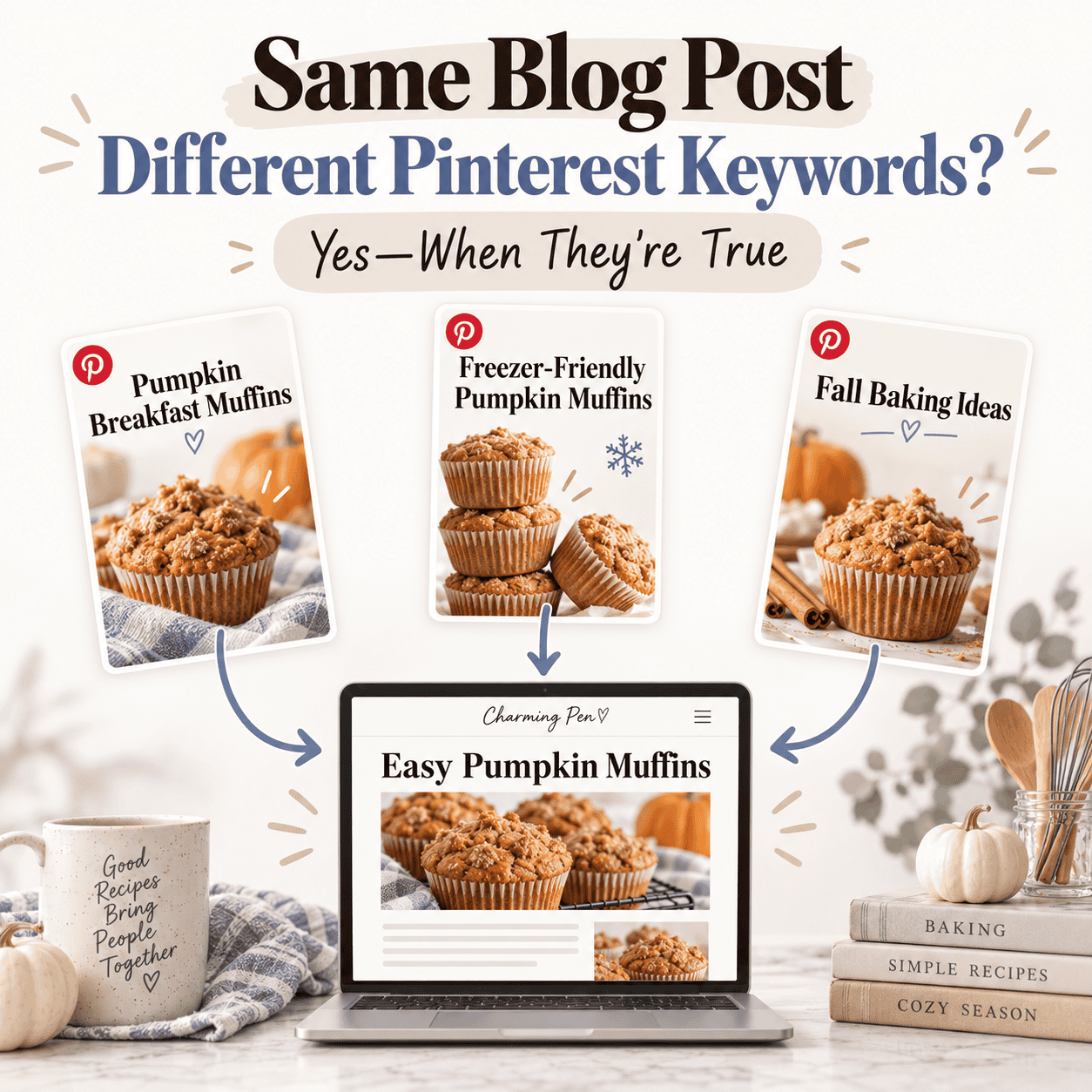
- different titles targeting different queries
- varied descriptions that reflect different search intent
- pin designs that match different content types and user expectations
This is not about making more pins.
👉 It’s about building a smarter pinning strategy.
Entry Points: How Pinterest Finds Your Content

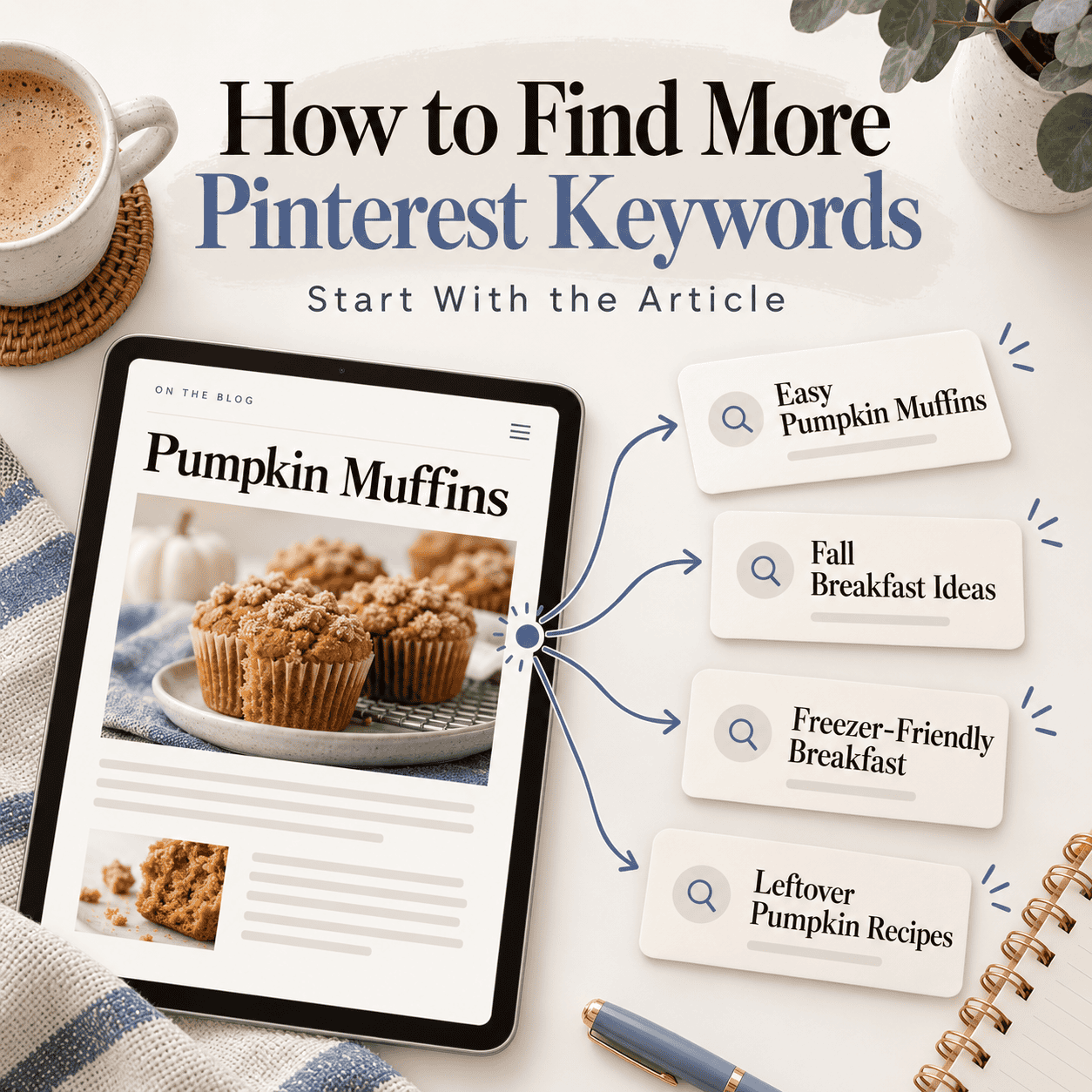
Every search a user makes on Pinterest is a potential entry point into your content.
When someone types into the Pinterest search engine, they are creating a pathway that can lead to your blog post.
Let’s use a simple example:
One article:
👉 Greek salad
Possible entry points:
- Greek salad
- Mediterranean salad
- cucumber tomato salad
- feta salad
- summer salad recipe
These are not different posts.
👉 They are different ways into the same content
Each one represents a slightly different search query, and each can place your content into a different set of search results.
Entry Points vs Topic Spine
Your topic spine keeps your content grounded.
Your entry points expand how that content is discovered.
If your topic spine is: Greek salad.
Then your entry points should stay closely related to that core idea.
If you move too far away from the topic spine:
- Pinterest struggles to classify your content
- your pins may appear in the wrong search results
- impressions can drop instead of grow
Why Entry Points Matter for Reach
Most creators only target one or two search queries.
That means their content only appears in a limited number of search results.
When you build more entry points:
- your content can appear in more searches
- you reach more users across different searches
- you increase your total audience over time
When Entry Points Become Saturation
Pinterest SERP Saturation: The Real Goal
What SERP Saturation Actually Means
SERP saturation is when your content appears across multiple related search results, not just one.
Instead of showing up for a single keyword, your content begins to appear in:
- closely related searches
- different ways people phrase the same idea
- seasonal content variations
- different content types and user intent
Why This Matters for Growth
If your content only shows up in one or two search results:
- your reach is limited
- your impressions plateau
- your traffic depends on a single entry point
This is where many creators get stuck.
They keep creating new pins, expecting more traffic, but they’re still targeting the same search query.
This Is How Pinterest Expands Visibility
Pinterest does not rely on a single signal, it combines multiple signals to determine relevance and visibility.
It connects your content to:
- related pins
- similar content
- seasonal content and trends
- different search behaviors
👉 All through entry points
This is how one blog post can grow:
Not by creating more content,
👉 but by being accessible through different ways people search
If your content only shows up for one search query, it hasn’t reached saturation. True growth happens when your content appears across multiple related search results.
The Biggest Mistake Most Creators Make
They create more pins, but all targeting the same entry point.
This often looks like:
- using the same keywords across multiple pins
- slightly changing pin titles or pin descriptions
- repeating the same idea with different pin designs
It feels like you’re doing more.
But from Pinterest’s perspective:
👉 nothing new is being added.
The Result
- internal competition between your own pins in search results
- no expansion into new search queries
- stalled growth
In some cases, this can even lead to:
- fewer impressions over time
- one viral pin carrying all performance
- other pins never surfacing in your Pinterest analytics
👉 You’re repeating the lattice instead of expanding it
Why This Happens
Most pinning strategies focus on volume.
The assumption is:
👉 more pins = more visibility
But without new entry points:
- you’re targeting the same audience
- appearing in the same search results
- relying on the same connection to drive traffic
What Pinterest Actually Needs
Pinterest doesn’t need more pins.
It needs:
👉 more ways to understand and access your content
That means:
- different search queries
- different entry points
- different pathways into the same node
What Happens When You Reach Saturation
As your content expands across more search results:
- impressions increase across different queries
- multiple pins begin to surface
- traffic becomes more stable over time
👉 This is where Pinterest starts to treat your content as a strong node
The Shift That Changes Everything
Instead of asking:
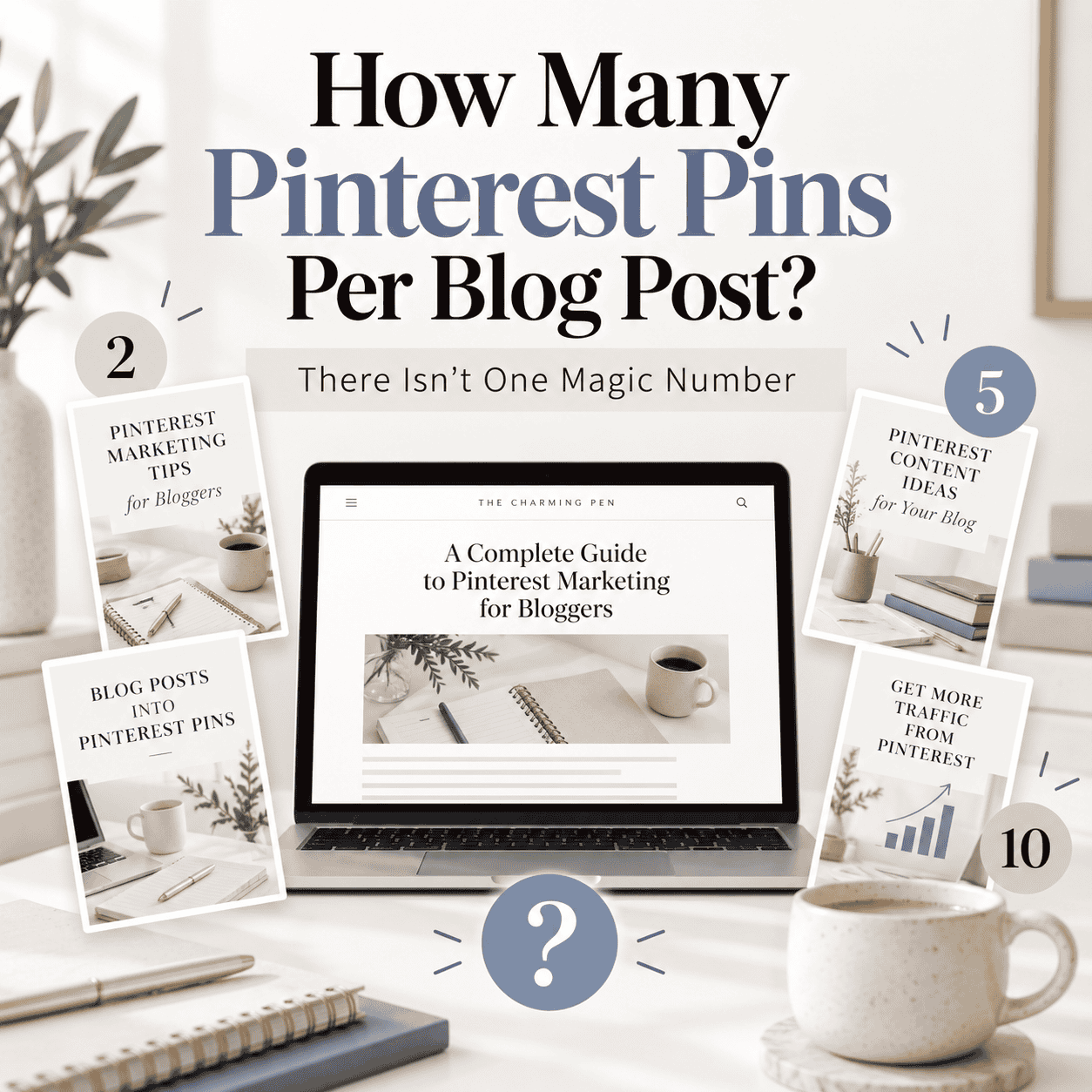
“How many pins should I create?”
Ask:
👉 “Where is my content not showing up yet?”
Most Pinterest growth stalls not because of a lack of pins, but because of a lack of search coverage.
What a Strong Lattice Looks Like
A strong piece of content doesn’t rely on one search query.
It appears across multiple related searches, giving Pinterest more ways to surface it in search results.
You can think of entry points like this:
Definition-Based
These target what something is.
- what is Greek salad
- ingredients in Greek salad
Experience-Based
These reflect how someone feels or what they’re going through.
- easy Greek salad recipe
- quick healthy salad
Stage-Based
- These match where someone is in a process.
- beginner salad recipes
- meal prep salad ideas
Recognition-Based
These help someone identify something they’re looking for.
- Mediterranean salad with feta
- cucumber tomato salad
Each of these represents a different way someone might search for the same type of content.
👉 And each one places your content into a different set of search results.
Why Most Content Stalls
Most creators only target one or two of these.
That means:
- their content appears in limited search results
- they rely on a single content type or search intent
- their impressions plateau over time
What a Strong Lattice Does Instead
A strong lattice builds multiple entry points across:
- different search queries
- different ways people phrase the same idea
- seasonal content shifts and trends
- different user intent and content types
This allows your content to:
- appear in more search results
- reach a wider total audience
- maintain visibility over a longer time period
👉 This is how impressions grow without relying on one viral pin
The Key Difference
Weak lattice:
- one or two entry points
- limited visibility
- unstable traffic
Strong lattice:
- multiple entry points
- broad search coverage
- more stable and sustainable growth
A strong lattice doesn’t just rank once, it continues to surface across different searches over time.
How Pinterest Builds This Over Time
Pinterest doesn’t understand your content instantly.
It builds confidence over time, based on how your content performs in search results, how users interact with it, and how it connects to other pins.
This is why Pinterest impressions can feel inconsistent, especially early on.
👉 What you’re seeing in your Pinterest analytics is often a reflection of where your content is in this process.
Level 1 — Testing
Pinterest is trying to understand what your content is.
At this stage, you may see:
- limited distribution
- inconsistent impressions
- new pins getting little to no traction
- unclear connections in search results
👉 What to do:
Stay clear and consistent. Focus on one strong topic spine so Pinterest can classify your content correctly.
Level 2 — Building (Node Formation)
Pinterest starts recognizing your content.
At this stage, you may notice:
- more than one pin getting saves
- early clustering in search results
- impressions starting to grow across multiple pins
- established pins beginning to perform better than new pins
👉 What to do:
Reinforce the same entry point. This is where long-term Pinterest growth is built.
Level 3 — Expanding (Entry Point Growth)
Now the node is stable.
At this stage:
- multiple pins perform consistently
- traffic becomes more stable over a longer time period
- new pins begin to surface more easily
- new entry points can be tested without breaking performance
👉 What to do:
Expand carefully. Add new entry points without changing the core content or topic spine.
Level 4 — Contraction (Rebalancing)
Traffic dips. Performance shifts.
This is where many creators think something has gone wrong, especially when they see a sudden drop in Pinterest impressions.
But this is normal.
Pinterest is:
- rotating content in search results
- testing new pins against older pins
- adjusting visibility based on user behavior
- reacting to seasonal content and trends
👉 What to do:
Return to your strongest entry point and reinforce what already works.
Important: This Happens at the URL Level
These levels do not apply to your entire Pinterest account.
👉 They apply to each individual blog post.
You might have:
- one post expanding
- several building
- others still testing
- some slowing down or contracting
This is completely normal.
As your content grows:
👉 you are managing a network of nodes at different stages, not a single piece of content
This is also why your Pinterest analytics can feel inconsistent across your account.
Different posts are being evaluated at different times, across different search queries and audiences.
Once you understand these stages, a drop in impressions is no longer confusing, it’s a signal of where your content is in the cycle.
Node Reinforcement vs Discovery Mode
Pinterest operates in two overlapping ways.
These aren’t official labels, but they describe what you’re seeing inside your Pinterest analytics when impressions rise, fall, or shift over time.
Reinforcement Mode
This is when Pinterest is prioritizing content it already trusts.
At this stage:
- established pins often become your top pins
- the same pins appear repeatedly in search results
- impressions are driven by established content
- strong nodes continue to get consistent visibility
👉 Pinterest is reinforcing known connections
Discovery Mode
This is when Pinterest is testing and exploring.
At this stage:
- new pins are being introduced into search results
- different entry points are being tested
- performance may feel inconsistent
- impressions can fluctuate as Pinterest evaluates new content
👉 Pinterest is building new connections
What This Looks Like in Practice
If your top-performing pins are mostly older pins:
- your content is being reinforced
- your node is trusted
- Pinterest is relying on proven performance
If your new pins are not getting impressions right away:
- you are likely in a discovery phase
- Pinterest is still testing your content
- not all pins will surface immediately
Why This Causes Confusion
This is one of the biggest reasons Pinterest performance feels unpredictable.
You might see impressions shifting between new and already pinned pins
But this doesn’t mean your content has failed.
👉 It means Pinterest is rotating between reinforcement and discovery
How to Respond
If you are in reinforcement mode:
- continue reinforcing what works
- avoid unnecessary changes to your topic spine
- maintain consistency in your pinning strategy
If you are in discovery mode:
- allow time for new pins to be tested
- focus on clear entry points
- avoid over-adjusting too quickly
👉 Both modes are necessary for long-term Pinterest growth
Growth happens when reinforcement and discovery work together, not when you try to force one over the other.
Why Pins Rotate (And Why Analytics Feel Inconsistent)
Pinterest is constantly changing what it shows in search results and the home feed.
It continuously:
- tests new pins
- re-evaluates your other pins
- personalizes results based on user behavior

Pinterest has also confirmed that feeds and search results are personalized, meaning different users will see different content based on their behavior and activity over time.
This is why you might see:
- impressions shifting across pins
- lower visibility on newer pins
- previously indexed pins continuing to dominate your top pins
- fluctuations in Pinterest views across a time period
Because of this:
- pins cycle in and out of visibility
- rankings don’t stay fixed
- traffic can feel unpredictable, even when your content hasn’t changed
Add in broader platform shifts:
- more ads competing for visibility
- more content creators and increased competition
- faster seasonal trends and content cycles
- different content types, including video pins and idea pins, being tested
And it becomes much easier to see why your Pinterest analytics can feel inconsistent.
What’s Actually Happening
Pinterest is not removing your content, it is rotating and redistributing it.
Strong content doesn’t disappear.
- it gets reused across different search results
- it gets reconnected through different entry points
This is why you may see:
- older pins return after a drop
- impressions shift between pins
- traffic move rather than completely stop
👉 The system is adjusting visibility, not removing your content entirely
When to Expand vs When to Reinforce
This is where most Pinterest growth is won or lost.
Many creators expand into new entry points too early, before the node is stable, or they keep repeating the same pins after reinforcement has already peaked, assuming that creating fresh pins means Pinterest will push them.
👉 The key is knowing what your content is telling you.

If Only One Pin Is Working
- repeat it
- reinforce it
- keep your keywords, pin titles, and pin descriptions aligned
At this stage:
- your node is still forming
- Pinterest is still learning your content
- impressions are often tied to a single pin
👉 This is not the time to expand
This is why some pins don’t take off, they were never given enough reinforcement to strengthen the node behind them.
If Multiple Pins Are Working
- expand into new entry points
- introduce different search queries
- test different ways people search for the same content
At this stage:
- your content is appearing across more search results
- impressions are spread across multiple pins
- traffic becomes more stable
👉 This is where growth starts to compound
If Performance Drops
- return to what worked
- reinforce your strongest entry point
- simplify your pinning strategy
👉 This is not failure, it’s a signal
Pinterest is shifting back into reinforcement mode.
The Pattern to Follow
- clarify first
- reinforce second
- expand third
- return when needed
Growth doesn’t come from constantly changing your approach.
It comes from responding to the stage your content is in.
How to Tell If a URL Is Ready for Expansion
A strong signal that your content is ready to expand is when performance is no longer tied to a single pin.
Instead, you’ll start to see:
- multiple pins tied to the same URL appearing consistently in your top pins or top performers
- performance holding across a longer time period, not just a short spike
- saves, pin clicks, and impressions spread across several pins for that same blog post
This is what you may notice inside your Pinterest analytics:
- more than one pin for the same URL contributing to your impressions
- traffic no longer dependent on one viral pin
- old and newer pins tied to that URL both getting visibility
👉 This is the difference between a spike and a stable node
You’re not looking for multiple posts performing, you’re looking for one post performing across multiple pins.
What This Tells You
When performance is distributed like this across pins tied to the same URL:
- the node is stable
- Pinterest understands that specific piece of content
- your content is appearing across multiple search results
The Shift That Changes Everything
Stop asking:
“How many pins should I make?”
Start asking:
👉 “How many ways can Pinterest access this content?”
The Core Idea Behind the Lattice System™
👉 A pin does not grow traffic, a well-connected node does
Pins are just the paths.
The node is what Pinterest trusts and continues to surface in search results over time.
What This Means for You
As your content grows:
You are no longer just creating blog posts.
👉 You are building and managing a Pinterest strategy
Where:
- each post is clearly defined
- each node is reinforced
- each expansion increases reach and impressions
- your website traffic is no longer dependent on one viral pin
Final Thought
Pinterest isn’t random.
It’s just been explained in a way that focuses on pins instead of structure.
Once you understand how your content connects:
- sudden drops in impressions start to make sense
- traffic shifts feel less unpredictable
- and your long term growth becomes more stable
If You Take One Thing From This
👉 Strength first. Coverage second. Always.
The best Pinterest strategy isn’t about creating more pins, it’s about building stronger connections.