Why Blanket Statements Miss the Mark
Blanket statements get tossed around in every corner of life — from everyday conversations to marketing advice. The reason I strongly dislike them is that they oversimplify what’s actually happening. For anyone who has played the game of life long enough, you’ve undoubtedly heard plenty of these sweeping claims. And frankly, they’re demeaning to the intelligence of the general population.
Pinterest is no exception. Advice like “group boards are dead” or “only fresh pins matter” pops up all the time, framed as absolute truth. But here’s the reality: Pinterest is nuanced. What works for one account, niche, or season may fail miserably for another. When we accept blanket statements at face value, we give up the chance to think critically, test, and grow.
What is a Blanket Statement?
A blanket statement is a sweeping claim presented as a universal fact.
- “Nobody reads blogs anymore.”
- “Pinterest only works for recipes.”
- “Group boards are dead.”
They’re usually rooted in some truth, but they strip away context, exceptions, and nuance. And in marketing, nuance is everything.
Feeling defeated yet? Navigating new strategy will pay off long-term.
How to Handle Blanket Statements on Pinterest
Before you let a big claim dictate your strategy, pause and run it through these filters:
- Ask: What’s the context? Who made the claim? What type of account were they managing?
- Check your own data. Do your analytics back it up, or show a different picture?
- Test, don’t assume. Run small experiments instead of making sweeping changes.
- Separate trend from truth. Something may work right now, but not forever.
- Stay adaptive. Pinterest evolves quickly. What was true last year may already be outdated.
The Top 5 Blanket Statements You’ll Hear About Pinterest
1. “Group Boards are Dead”
- The claim: Group boards no longer work, period.
- The nuance: Many broad, low-engagement boards do hurt performance. But niche, high-quality boards with active contributors can still reach a broad audience.
- My perspective: For my own food blog, I actually collect group boards — even broad ones. Why? Because each one gives me an additional share point for my pins. The more I test across broad and niche boards, the more I learn about their usefulness. Even broad boards offer easy ways to experiment and find hidden gems. And because I’ve tested them myself, I can confidently recommend the best-performing boards to my clients. Group boards aren’t inherently dead — their value depends on how you use them.
Takeaway: Audit boards individually. Use them as extra distribution points and testing grounds, but don’t rely on them blindly.
2. “Only Fresh Pins Matter”
- The claim: Repins or repurposed content won’t perform.
- The nuance: Fresh pins do help discoverability. But here’s the catch — a fresh pin isn’t limited to new blog posts or URLs. Pinterest counts any new visual design as a fresh pin, even if it points to the same evergreen URL.
- My perspective: This is where evergreen content becomes gold. It gives you a template testing ground — you can create multiple fresh designs for the same recipe, tutorial, or article. Over time, you’ll see which visuals drive clicks, saves, and traffic. Instead of burning yourself out by constantly producing new content, you can leverage what you already have in more innovative ways.
Takeaway: Don’t confuse “fresh” with “new post.” Evergreen content paired with fresh pin designs is one of the most sustainable strategies on Pinterest.
3. “Tailwind is Useless”
- The claim: Manual pinning is the only way to grow.
- The nuance: Tailwind has evolved. While I dislike some of the newer features and choose not to use them, the platform still offers primary time-saving tools. The interval pinning cadence is excellent, and the ability to see when you last pinned something to a board saves me from manually tracking every pin. As a manager, that’s a huge plus.
People often complain about pricing, but the value is there if you’re using features like Communities, which can still give your content a boost. Tailwind is also experimenting with new tools, like an engagement feature that lets you boost a pin and interact with others’ boosted pins directly in the Pinterest comments. Whether that idea floats in the long term remains to be seen — but it’s proof that Tailwind is willing to innovate and adapt to what we, as creators and managers, need.
Takeaway: Tailwind isn’t for everyone, but dismissing it outright ignores its ongoing evolution. Test it against manual posting, and decide based on your workflow, budget, and client needs.
4. “Pinterest Doesn’t Work for My Niche”
- The claim: Only food, DIY, and weddings succeed.
- The nuance: Pinterest is a search engine. Finance, parenting, fitness, legal, and countless other niches drive traffic when optimized with the right keywords and visuals. If it’s not working for your niche, there’s a good chance it simply hasn’t been fully tapped yet.
- My perspective: That’s actually a huge opportunity. Getting in on the ground floor means you can shape how Pinterest categorizes and surfaces your content. By staying consistent and testing new keyword combinations, you’re essentially training Pinterest’s AI that your content is valuable. Over time, as it gains interactions, Pinterest recognizes your niche as worth exploring. This doesn’t usually mean instant growth — but a slow burn that feeds the machine until it learns to surface your content more widely.
Takeaway: Don’t write off your niche. Be consistent, experiment with keywords, and understand that you may be pioneering the space rather than following a well-trodden one.
5. “The Algorithm is Against Me”
- The claim: Pinterest is throttling my account.
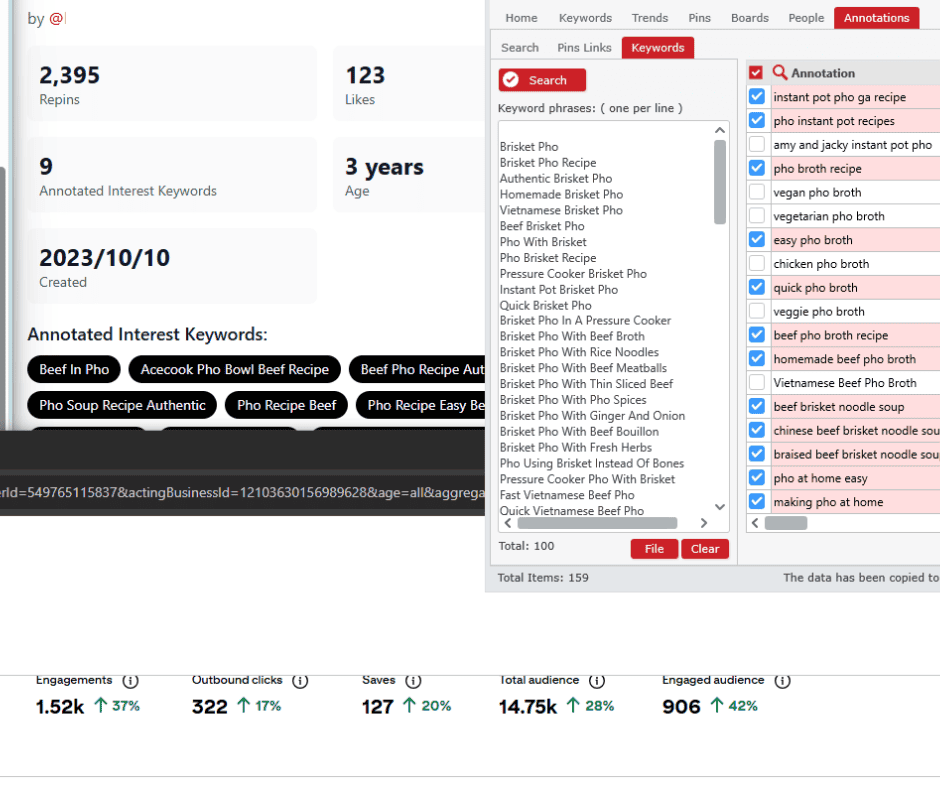
- The nuance: Seasonal dips, annotation mismatches, or low CTR are usually the cause. Rarely is it “personal.” We now know that most throttling isn’t due to a hidden spam filter, but rather the account needing adjustments. That might mean a full audit (insert your link here) and optimization, fresh pin designs, or a deeper keyword strategy.
- My perspective: The key is not to panic and overhaul everything at once. Making one adjustment at a time and giving it a week or two to take effect is how you bring an account back to life. Don’t throw the baby out with the dishwater in an all-or-nothing attempt to “fix” your account.
Takeaway: The algorithm isn’t out to get you. Treat dips as signals to fine-tune your account step by step.
The Bigger Picture
Blanket statements spread because they’re easy to say and hard to disprove. They give people a sense of certainty in a fast-changing platform. But Pinterest, like life, is rarely black-and-white. And honestly? It would be lovely if it were cut and dried — it would make my job a lot easier.
The smarter play? Treat big claims as hypotheses, not rules. Test them, look at your data, and adapt them to your niche. No time for all this falderal? Then reach out—I’m happy to help you figure out how to up your Pinterest game.