Pinterest creators are often told to “wait 3–6 months” to see growth from a strategy. That timeline can be accurate — but it’s also commonly used as a buffer, giving managers time to stabilize an account before results are expected.
If your Pinterest account feels slow, the issue isn’t time. It’s that Pinterest hasn’t locked in what your content is for yet.
Let’s clarify how the Pinterest growth timeline actually works on this image-based platform.
Quick Answer
The Pinterest growth timeline begins after Pinterest understands your content — not when you first start publishing, especially if strategy, management, or consistency have changed.
Because Pinterest functions as a visual search engine, it evaluates classification, intent, and consistency before expanding distribution.
The first thing to do is confirm that your pin design, target keywords, and overall Pinterest marketing strategy all reinforce the same purpose. If your visuals, wording, and boards are pointing in different directions, Pinterest will hesitate.
How to Confirm Your Pinterest Strategy Is Aligned

Before relying on time, confirm that your pins send one consistent message across five places:
1. One Clear Intent Per URL
Write the purpose of the page in one sentence.
If you need multiple sentences, the topic is likely too broad.
2. Visuals Match the Topic
Your pin image and text overlay should make the subject obvious within a second.
Avoid phrasing that could apply to multiple topics.
3. Keywords Reinforce the Same Direction
Pin titles, descriptions, and boards should use the same core phrase.
If your overlay says “Easy Dinner Ideas” but the post targets “Creamy Tuscan Chicken,” you’ve introduced drift.
4. Boards Match the Exact Theme
Pin to boards that reflect the precise topic — not broad lifestyle categories.
Boards act as classification signals.
If your boards are too broad or mismatched, distribution slows. Your board structure directly affects how Pinterest categorizes your content.
5. Strategy Has Held Long Enough
If positioning, keywords, or visual direction changed mid-cycle, the evaluation period restarted.
Quick Self-Test
If your:
- Pin image
- Overlay
- Title
- Description
- Board
All point to the same topic and audience, your signals are stable.
If they vary in purpose, growth will stall.
Why Pinterest Is Different From Other Social Platforms
Pinterest isn’t designed for instant virality — even though occasional spikes do happen. Unlike fast-moving social networks, it operates as a visual search engine. Users arrive with intent: they search, plan, and save. That means Pinterest analyzes how your pin’s topic, keywords, visuals, and boards reinforce each other before expanding distribution. Exposure can happen quickly, but sustained reach depends on repeatable patterns, not momentum alone.
What Pinterest Does Before Expanding Reach
When you publish new content, Pinterest does not immediately scale distribution. It first assigns topic signals and observes how users respond within small testing pools. During this phase, it evaluates whether your keywords, visuals, boards, and audience behavior reinforce the same direction. If those signals remain stable, distribution expands. If they shift, testing continues instead of compounding.
Why the “3–6 Month Rule” Became Popular
Over recent years, marketers noticed that Pinterest often takes longer than other social media platforms to show growth.
And that’s true.
The overlooked factor is this:
The 3–6 month timeline only applies once your strategy is stable.
If you are constantly:
- redesigning pin images
- switching target keywords
- creating similar designs with different intent
- launching new boards weekly
- chasing viral pins
Then Pinterest never locks in your identity.
And the timeline stretches indefinitely.
The Real Pinterest Growth Timeline

When signals remain stable, growth tends to move through three phases:
Phase 1: Classification (Weeks 1–2)
Impressions are low but steady. Pinterest assigns topic signals and observes early behavior within small testing pools.
Phase 2: Testing (Weeks 3–6)
Impressions fluctuate. Some small spikes may occur. Saves matter more than exposure here — they indicate the pin matched the context it appeared in.
Phase 3: Expansion (Weeks 6–12+)
Impressions grow week over week. Saves scale gradually. Outbound clicks increase consistently. Distribution compounds instead of resetting.
If signals shift during Testing, Pinterest does not move into sustained expansion. Instead, distribution contracts and re-enters limited testing.
That looks like:
- Short spikes followed by drops
- Narrow reach
- Movement without compounding growth
If you’re unsure whether you’re in early testing or something deeper is wrong, here’s a breakdown of common reasons your Pinterest pins aren’t getting views.
Sustained expansion shows pattern stability. Repeated testing shows instability.
Not every increase in impressions signals expansion. Sometimes you’re seeing a temporary baseline bump rather than compounding growth.
How Growth Looks Different on New vs Mature Accounts

Account age changes how expansion appears.
On new accounts, testing pools are small. Growth is subtle.
Impressions rise gradually
Saves appear before clicks scale
Expansion is controlled, not explosive
Small fluctuations are normal.
On mature accounts, prior history increases testing size.
Spikes are larger
Drops feel sharper after strategy shifts
Expansion compounds more visibly
Because mature accounts carry classification history, they can absorb more variation — but major shifts still trigger re-testing.
In both cases, sustained week-over-week growth — not isolated spikes — signals true expansion.
The Most Common Reasons Pinterest Growth Stalls
- Inconsistent Pin Design
On new accounts, dramatic visual shifts can slow classification because Pinterest has limited history to rely on. Mature accounts can tolerate more variation, but large changes in visual direction may still trigger re-testing.
Fix: On a new account, maintain consistent text overlays, structure, and topic framing for at least 30–45 days before introducing major variation.
- Weak Keyword Research
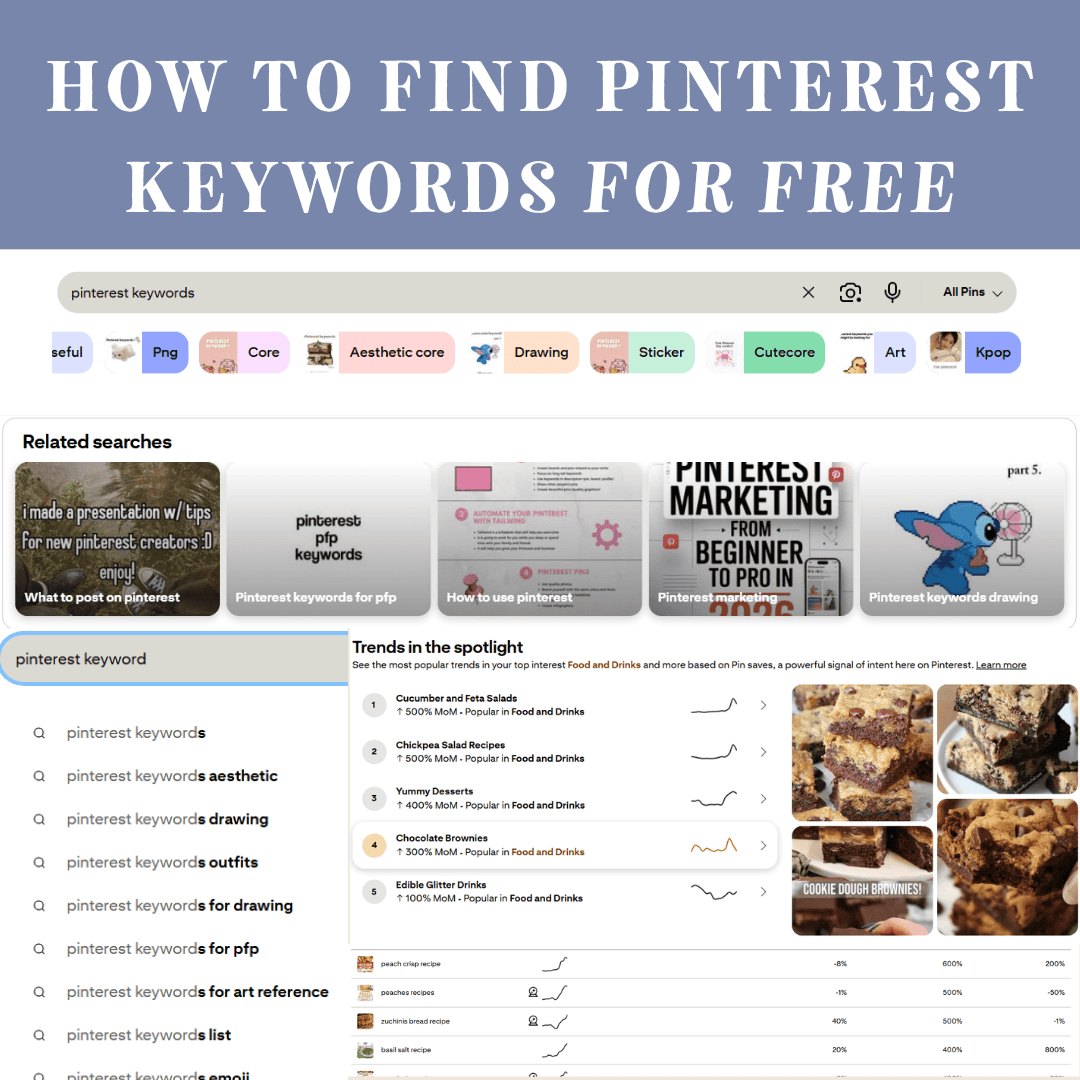
If you aren’t using relevant keywords aligned with your target audience, Pinterest SEO suffers.
Fix: Use strategic keyword research and align pin titles and descriptions.
- Too Many Pin Types at Once
Launching static pins, video content, and Idea Pins simultaneously without a cohesive strategy confuses classification.
Fix: Focus on one primary format during early stabilization.
- Constant Minor Tweaks
Even small changes to boards, keywords, or messaging can reset evaluation.
Fix: Hold a stable approach for 30–45 days before adjusting.
What Slow Pinterest Growth Is Not
Slow growth is usually not:
- A shadowban
- A penalty
- A broken Pinterest algorithm
- A lack of consistent pinning
- A failure of your business account
Pinterest currently has hundreds of millions of active monthly users and continues expanding across international markets. The platform’s user base is strong — but it requires stable signals.
What To Do If Your Pinterest Account Isn’t Growing (And You’re 3–6 Months In)
If you hired a manager and you’re now 3–6 months into a strategy without measurable movement, ROI questions are valid.
Before assuming the strategy failed — or assuming you just need more time — confirm what actually happened during those months.
1. Did the Account Stabilize?
Has your positioning, keyword focus, and visual direction stayed consistent for at least 30–45 consecutive days?
If strategy shifted mid-cycle, the timeline restarted.
Growth only compounds after stability.
2. Was the Content In Season?
Pinterest is demand-driven.
If you were publishing:
- Holiday recipes after the peak search window
- Summer decor in late fall
- Back-to-school content in October
Then growth would naturally be limited.
Seasonality affects:
- Search volume
- Home feed exposure
- Save behavior
A stable strategy in a low-demand window won’t scale the same way as one aligned with seasonal interest.
3. Was There One Clear Topic Per URL?
Did each post reinforce one primary intent?
Or were pins framed in multiple directions?
Intent drift slows expansion.
4. Did Keywords and Boards Reinforce the Same Positioning?
Were target keywords stable?
Were boards tightly matched?
Boards function as classification signals.
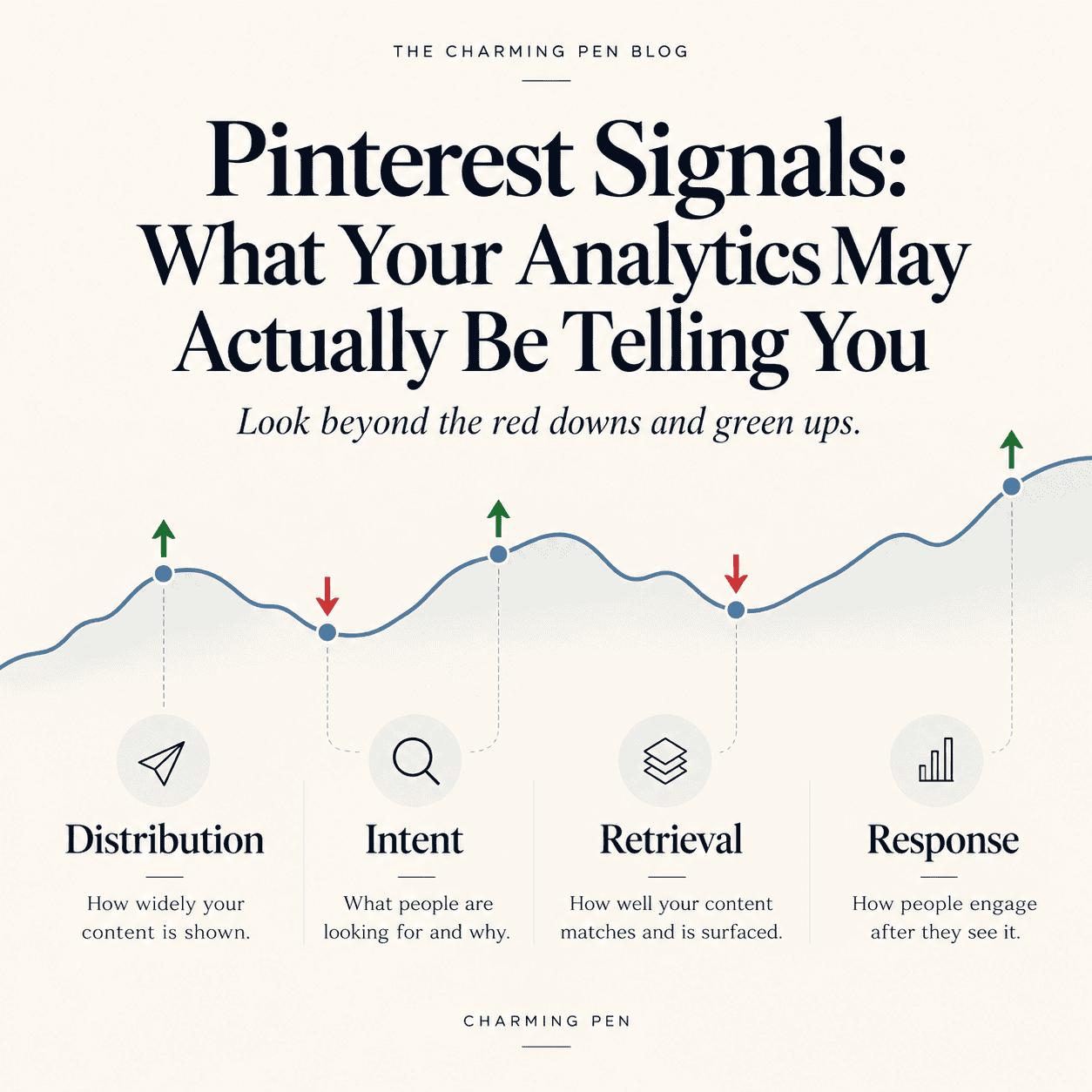
5. What Does Pinterest Analytics Show?
Look for:
- Week-over-week growth
- Saves appearing before impressions scale
- One URL gaining traction
Small upward movement suggests testing.
Flat metrics suggest stabilization never fully occurred.
The ROI Reality (With Seasonality in Mind)
If the account never stabilized, the 3–6 month window reflects transition — not growth.
If the content was out of season, the strategy may need to cycle into a higher-demand period before meaningful expansion occurs.
Growth on Pinterest is influenced by:
- Stability
- Signal consistency
- Audience behavior
- Seasonal demand
Time alone doesn’t determine ROI.
Alignment does.
Why Pinterest Rewards Stability
Pinterest has evolved significantly since its initial launch by Ben Silbermann, Evan Sharp, and Paul Sciarra.
Pinterest has evolved into the leading visual search engine, not just another social platform.
That evolution means:
- Stability drives growth
- Alignment matters
- Speed alone doesn’t scale
- Time works after signals hold
Final Thoughts on the Pinterest Growth Timeline
The 3–6 month rule isn’t wrong — it’s conditional.
If your signals were stable, your content was in season, and your positioning held long enough to be tested, then that window reflects real growth time.
If those conditions weren’t in place, that window reflects transition time.
Those are not the same thing.
Pinterest does not reward effort alone. It expands distribution when patterns repeat and behavior confirms them.
If you’re evaluating ROI, don’t ask, “Has it been 3–6 months?”
Ask:
- Did we stabilize?
- Did we stay consistent?
- Did we align with demand?
- Did we allow testing to compound?
If the answer is yes, patience is strategic.
If the answer is no, refinement comes before more time.
Growth on Pinterest begins when the system stops shifting — not when the calendar turns.