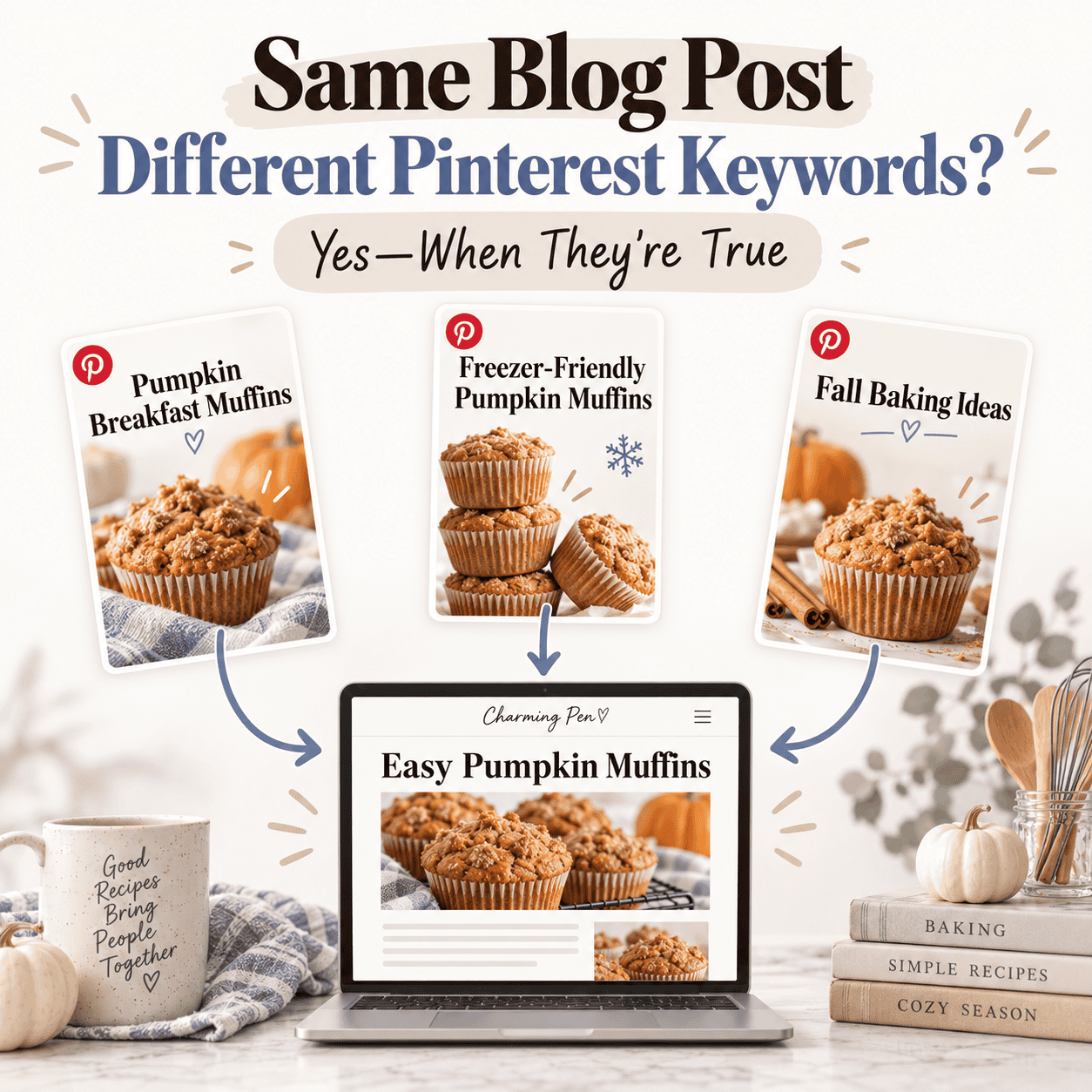
Yes. You can use different keywords for Pinterest Pins even when those Pins all lead to the same blog post.
The important part is that every keyword must still accurately describe something the article genuinely offers.
One blog post may answer several different Pinterest searches. That does not mean every keyword you discover belongs on a Pin for that page.
A good rule to remember is:
Different keywords are fine. Different truths are not.
If you’re still wondering whether you can create multiple Pinterest Pins for the same blog post at all, I explain that separately in my beginner guide to using multiple Pins for one URL.
One Blog Post Can Answer More Than One Pinterest Search
Imagine you’ve written a recipe for pumpkin muffins.
Your blog post might simply be called:
Easy Pumpkin Muffins
But the recipe might also genuinely work for someone searching for:
- pumpkin breakfast muffins
- freezer-friendly pumpkin muffins
- fall baking ideas
- recipes using leftover pumpkin puree
Those are different Pinterest searches, but they can all lead to the same useful article.
You don’t need to rewrite the blog post every time.
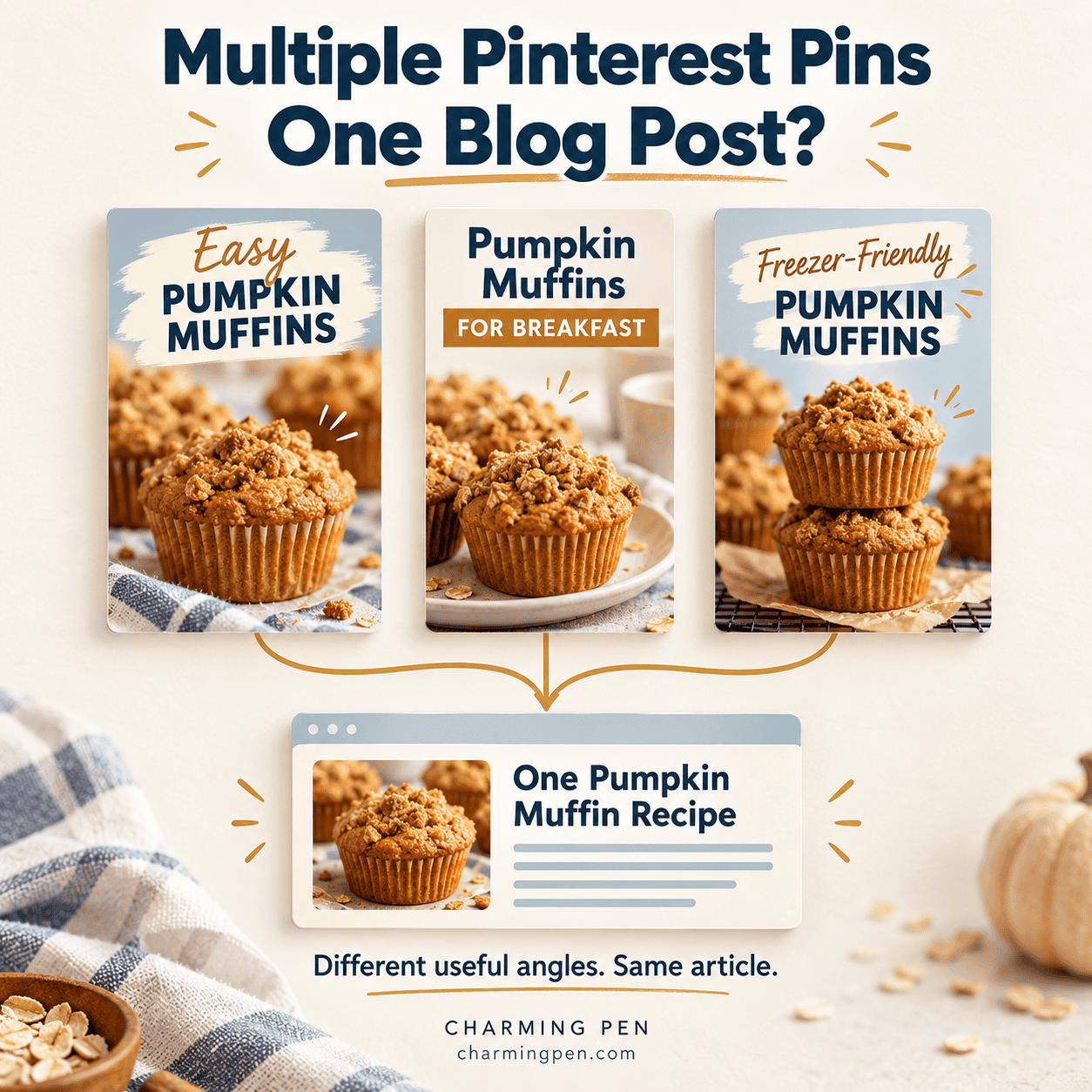
Instead, each Pin can emphasize the part of the article that is most relevant to that particular search.
For example, someone looking for freezer-friendly pumpkin muffins may care about storage and make-ahead convenience, while someone searching for pumpkin breakfast muffins is approaching the exact same recipe from a different need.
That is one reason a single URL can legitimately support several Pinterest keyword variations.
Can Pinterest Pins for the Same URL Use Different Keywords?
Yes — as long as the landing page supports them.
Pinterest’s current guidance specifically tells creators to make sure the images, text and keywords in a Pin match the details on the landing page, and to link to content that is clearly related to the Pin. Pinterest Help
That creates an important boundary.
Suppose your pumpkin muffin recipe contains eggs and dairy.
You should not create Pins targeting:
Vegan Pumpkin Muffins
or:
Egg-Free Pumpkin Muffins
simply because those searches appear attractive.
The keyword does not change what the recipe actually contains.
A better rule is:
The Pin can change the doorway. It cannot change what’s inside the room.
This is also where understanding how Pinterest understands what your content is about becomes useful. Pinterest’s own guidance says that the images, text and keywords used in a Pin should accurately match the landing page people reach after clicking.
That makes relevance more important than simply finding the largest keyword available.
Different Keywords Don’t Require a Completely Different Topic
Using different keywords doesn’t mean every Pin needs to move into an entirely different subject.
Sometimes you’re simply adding useful information to the same core idea.
For example:
Pumpkin Muffins
could become:
Easy Pumpkin Muffins
One-Bowl Pumpkin Muffins
Pumpkin Muffins for Breakfast
Freezer-Friendly Pumpkin Muffins
The underlying recipe hasn’t changed.
What has changed is the specific information you’re giving the person who encounters that Pin.
That’s why meaningful modifiers such as easy, one-bowl, breakfast, freezer-friendly or fall can be much more useful than decorative words such as:
Amazing Pumpkin Muffins
Delicious Pumpkin Muffins
Best Pumpkin Muffins
Those adjectives may make the headline sound enthusiastic, but they don’t necessarily give Pinterest or the reader much new retrieval information.
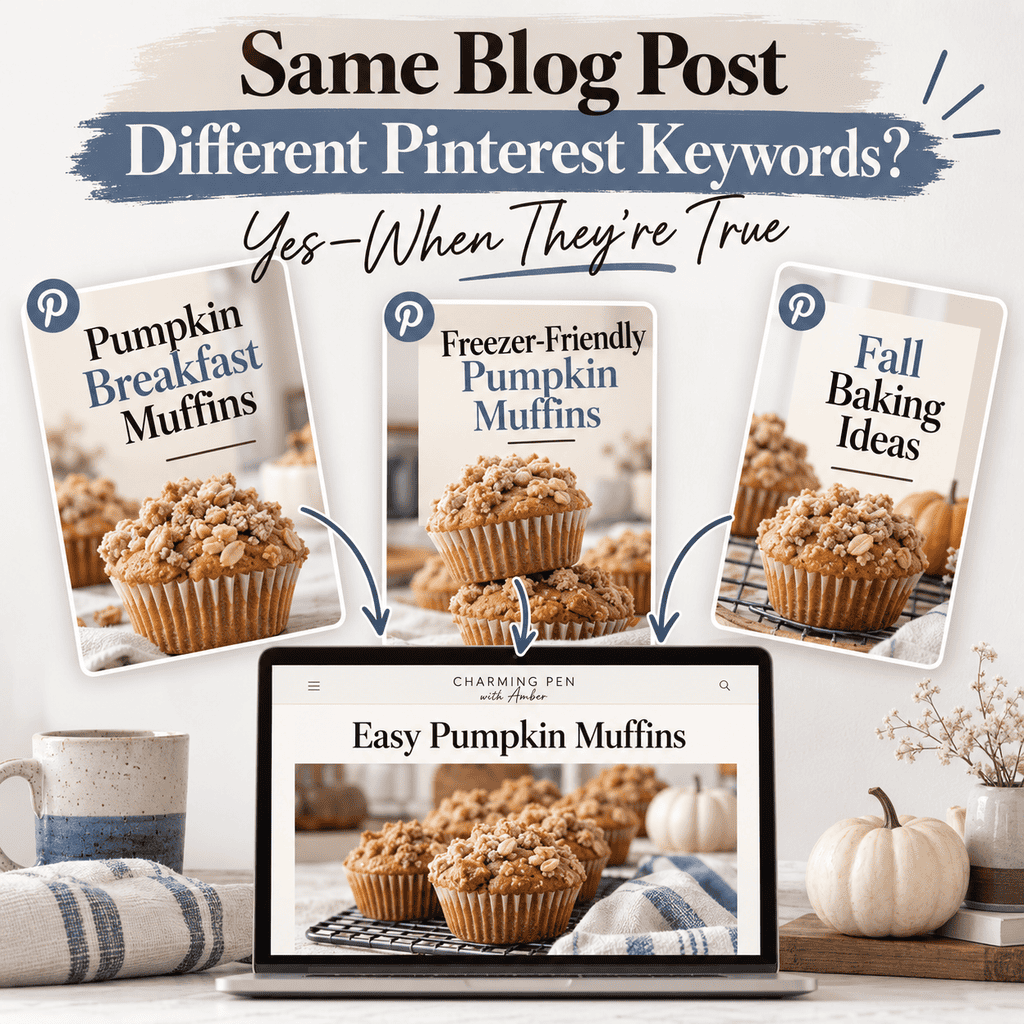
Give Each Pinterest Pin One Clear Job
You also don’t need to squeeze every possible keyword into every Pin.
If one Pin is about:
Freezer-Friendly Pumpkin Muffins
let that Pin clearly communicate the freezer-friendly angle.
Another Pin might focus on:
Easy Fall Breakfast
And another could emphasize:
Pumpkin Chocolate Chip Muffins
Each Pin has a clearer purpose.
That makes the Pin easier for a person to understand and gives you a cleaner way to see which searches, features and use cases are connecting.
If you’re not sure how to find Pinterest keywords beyond your obvious primary phrase, that’s a separate research process. The goal here isn’t to collect the largest possible keyword list. It’s to decide which of those keywords honestly belong to the article you’re promoting.
How Different Can the Keywords Be?
This is where I’d give beginners a very simple test.
Before using a different keyword on a Pin, ask:
If someone searched this phrase, clicked my Pin and landed on the article, would the page satisfy what I just promised them?
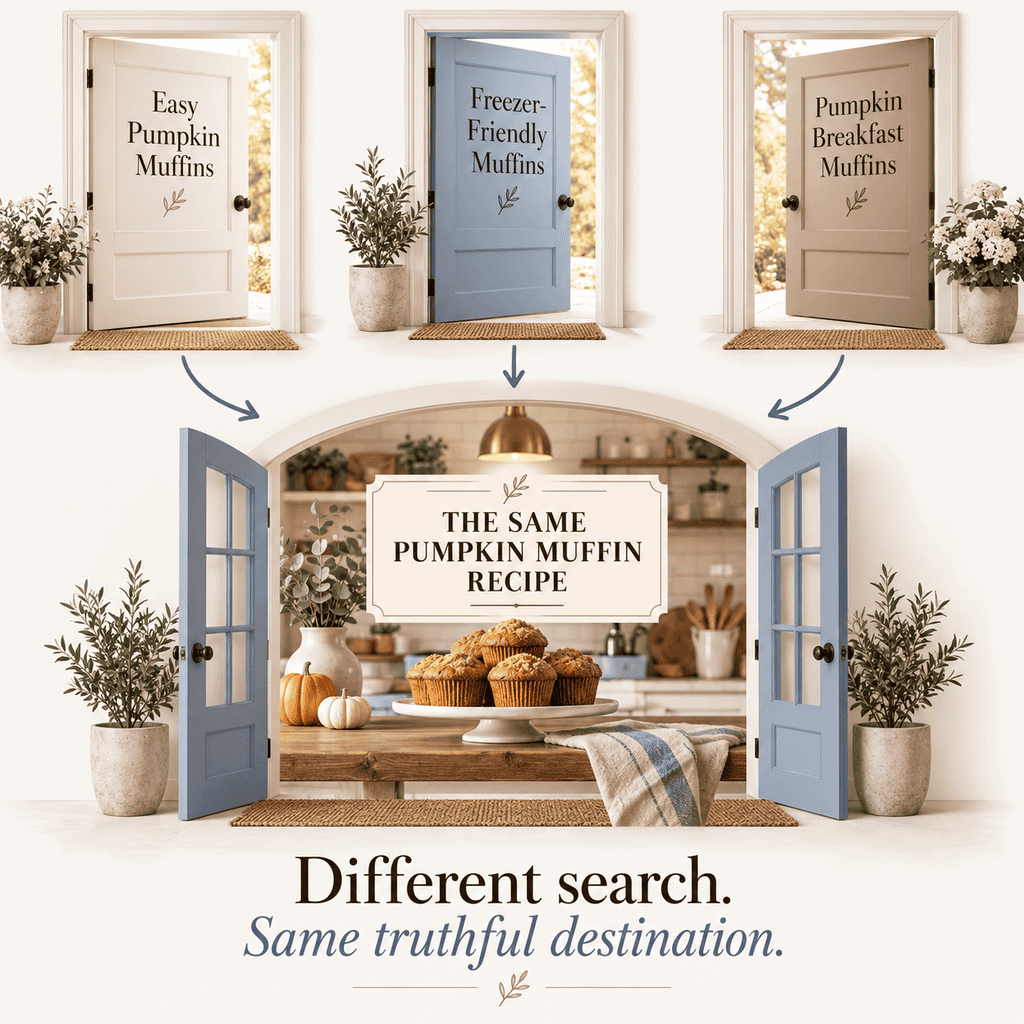
If the answer is yes, the keyword may represent a legitimate search path.
If the reader would feel misled, the keyword has gone too far.
This matters more than search volume.
A high-volume Pinterest keyword is not useful if your article doesn’t actually answer that search.
Search volume doesn’t change the article.
One Article Can Have Multiple Pinterest Search Paths
In One Article, Many Pinterest Search Paths, I go deeper into the idea of multiple Pinterest search paths and why one URL can legitimately surface for several different needs, occasions and searches.
The beginner version is much simpler:
Research can show you possible keywords.
The article decides which ones you can actually use.
So yes, Pins going to the same blog post can use different keywords.
Just make sure every keyword tells the truth about what’s waiting after the click.
You Asked, Amber Answers
Pinterest advice can get complicated fast. Here are my quick answers to a few of the most common questions around this topic.

Yes—this image was made with AI. As a small business owner wearing a lot of hats, I don’t always have the time to arrange a professional photo shoot, so this is one way I create polished visuals for my business.