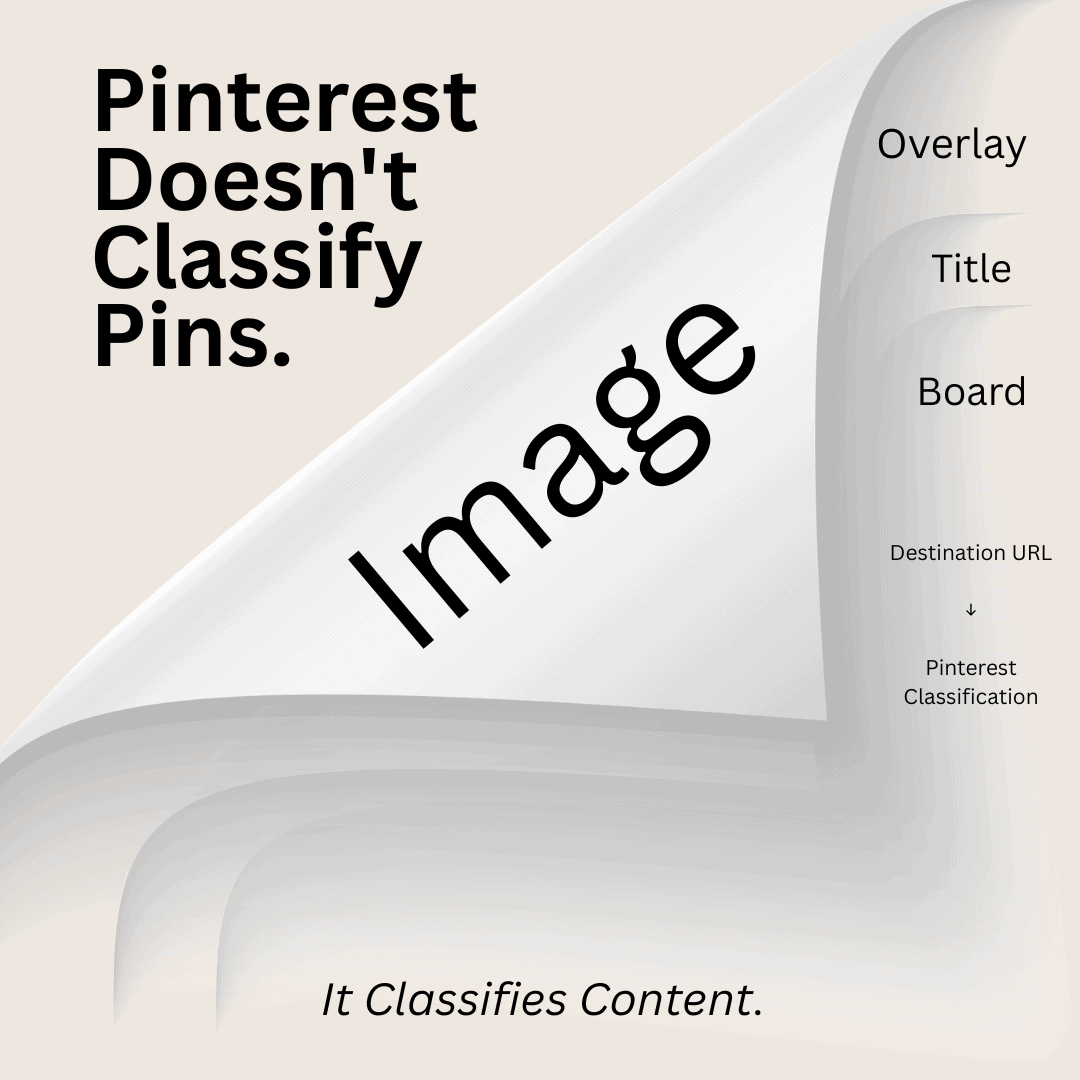
Most Pinterest creators think the platform classifies individual pins.
It doesn’t.
Pinterest classifies the content behind those pins.
More specifically, Pinterest is attempting to classify the destination each pin points to, using every available signal it can gather.
Every fresh pin gives Pinterest another opportunity to understand what a page represents. Images, titles, descriptions, boards, and the destination page all contribute signals that help Pinterest build confidence around the topic of a URL.
Before Pinterest decides how widely to distribute your content, it first has to answer a much simpler question:
What is this page actually about?
That process is content classification.
Understanding how Pinterest classifies content helps explain why some pages steadily gain visibility while others struggle to gain traction. Classification is the process Pinterest uses to build confidence about what a page represents over time.
Content Classification Happens Before Distribution
In my previous article, How Pinterest Pin Distribution Really Works, I explained that Pinterest pin distribution begins with classification before behavior expands reach.
Classification is the foundation.
Distribution is the result.
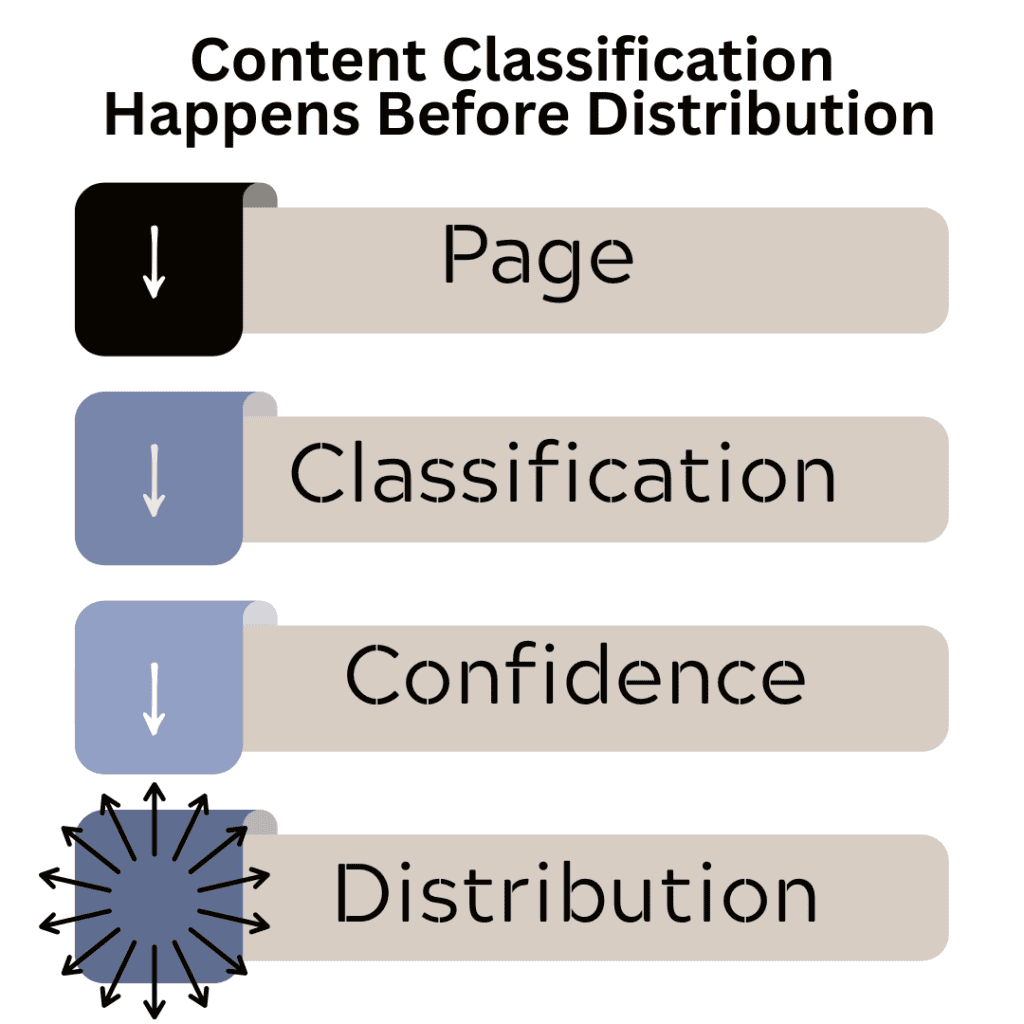
Pinterest cannot decide who should see your content until it has first determined what your content represents.
Think of classification as building a profile for your page.
Every signal either strengthens or weakens Pinterest’s confidence in that profile.
Pinterest Is Building an Understanding of the Entire Page
Many creators assume Pinterest classifies pages by keywords alone.
Keywords certainly matter, but they are only one piece of a much larger picture.
Pinterest receives information from multiple sources that work together to help classify a page.
This idea aligns with Pinterest’s published engineering work on Pin2Interest, which describes a large-scale system for classifying content into interests before it can be effectively retrieved or recommended.
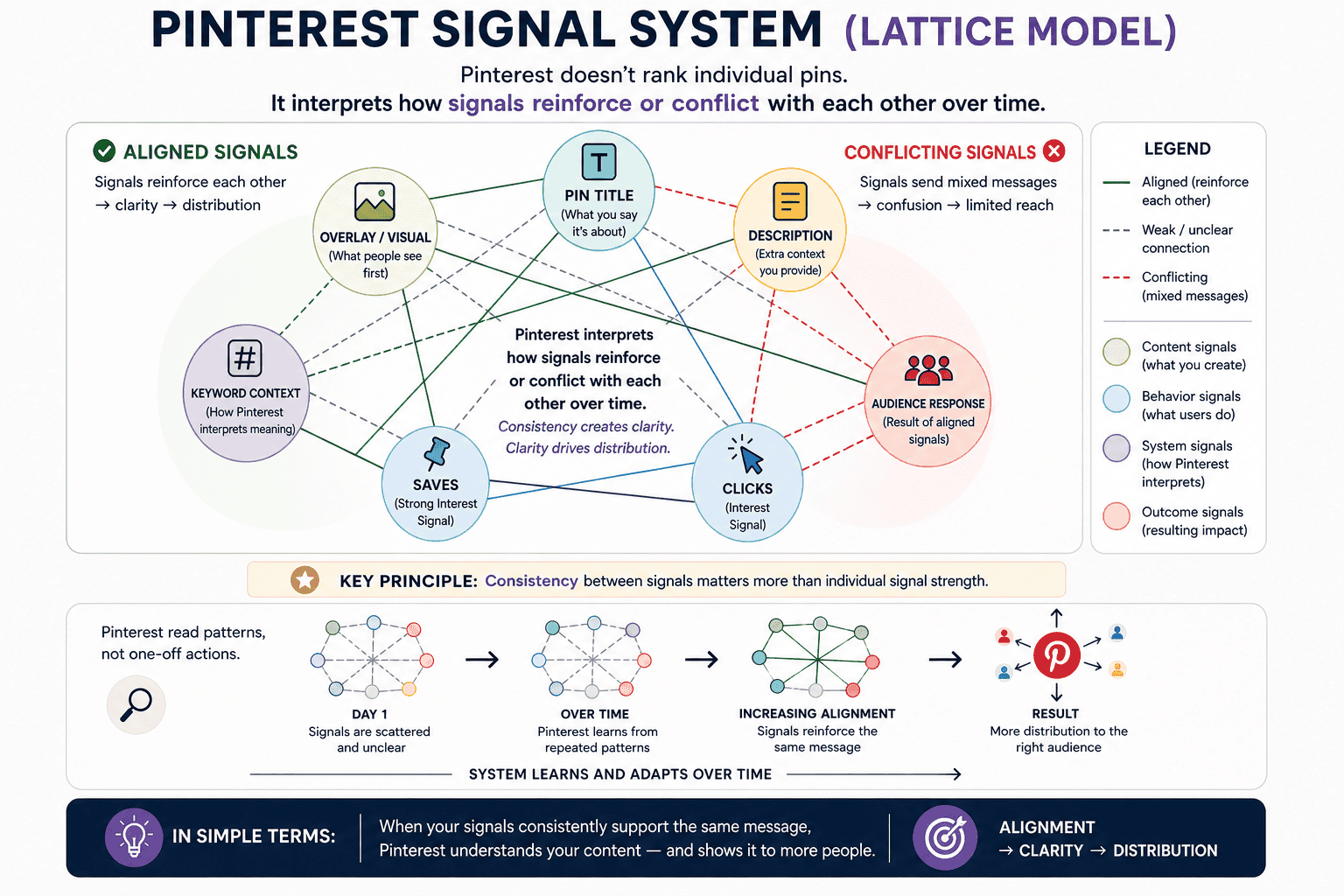
No single signal determines classification by itself. Instead, Pinterest evaluates how consistently those signals support the same primary topic. The more those signals agree, the greater Pinterest’s confidence becomes.
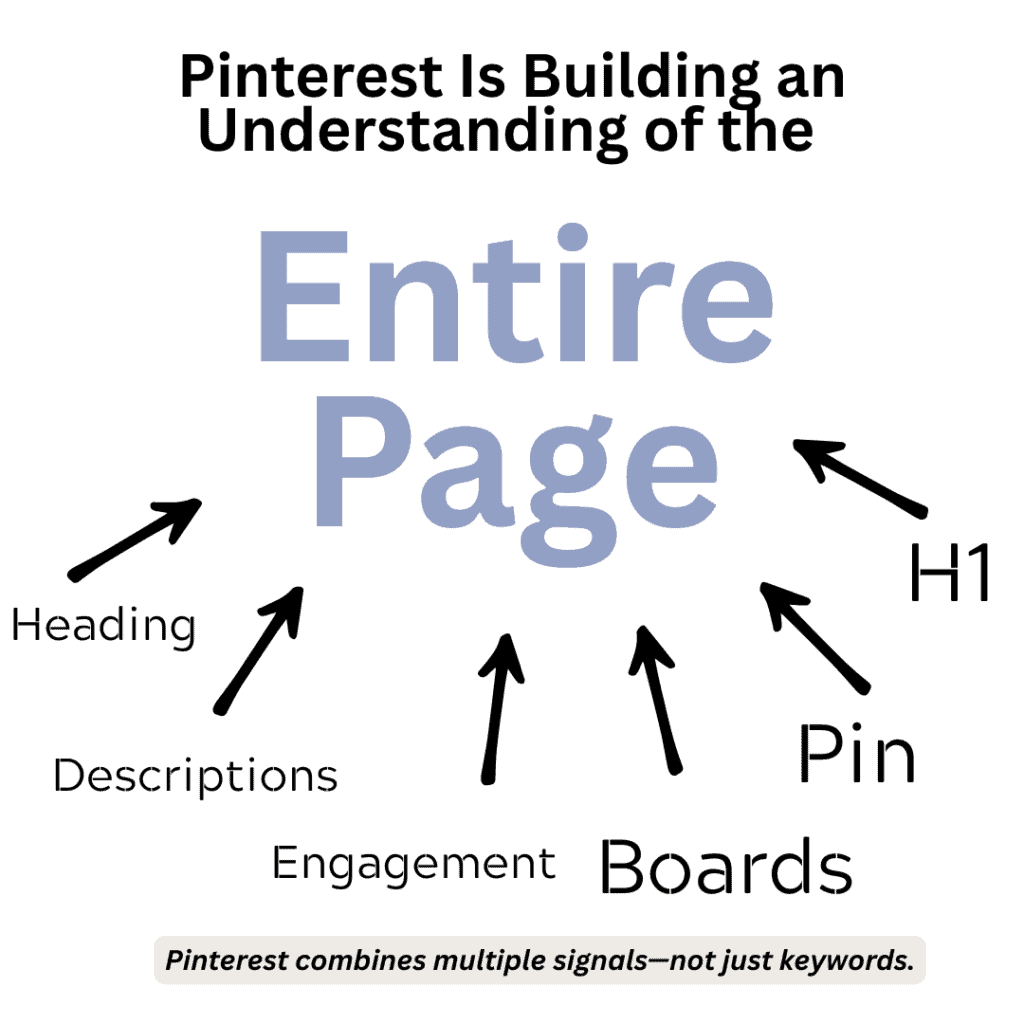
These include:
- The destination page
- Page headings
- Supporting text
- Images
- Text overlays
- Pin titles
- Pin descriptions
- Rich Pin information
- Board placement
- Historical engagement
- Relationships with other pins pointing to the same URL
Rather than evaluating these signals independently, Pinterest appears to combine them into a broader understanding of the page. Each signal contributes evidence that either reinforces or weakens confidence in the same underlying topic.
This is why isolated optimization rarely produces lasting results.
Strong classification comes from consistency across every signal.
What Is a Search Entity?
A search entity is the primary concept Pinterest associates with a piece of content.
Pinterest has also described its Interest Taxonomy, a knowledge graph used to organize and understand content at scale. While this article uses the term search entity to describe the primary concept associated with a page, the broader idea of organizing content into related interests is consistent with Pinterest’s published engineering research.
Search entities are not fixed categories. They become more refined as Pinterest gathers additional signals and confidence increases.
For example, imagine a recipe for Protein Pancake Bowls.
Pinterest is not simply recording individual words like:
- protein
- pancakes
- breakfast
Instead, it is attempting to understand that the page represents one complete topic.
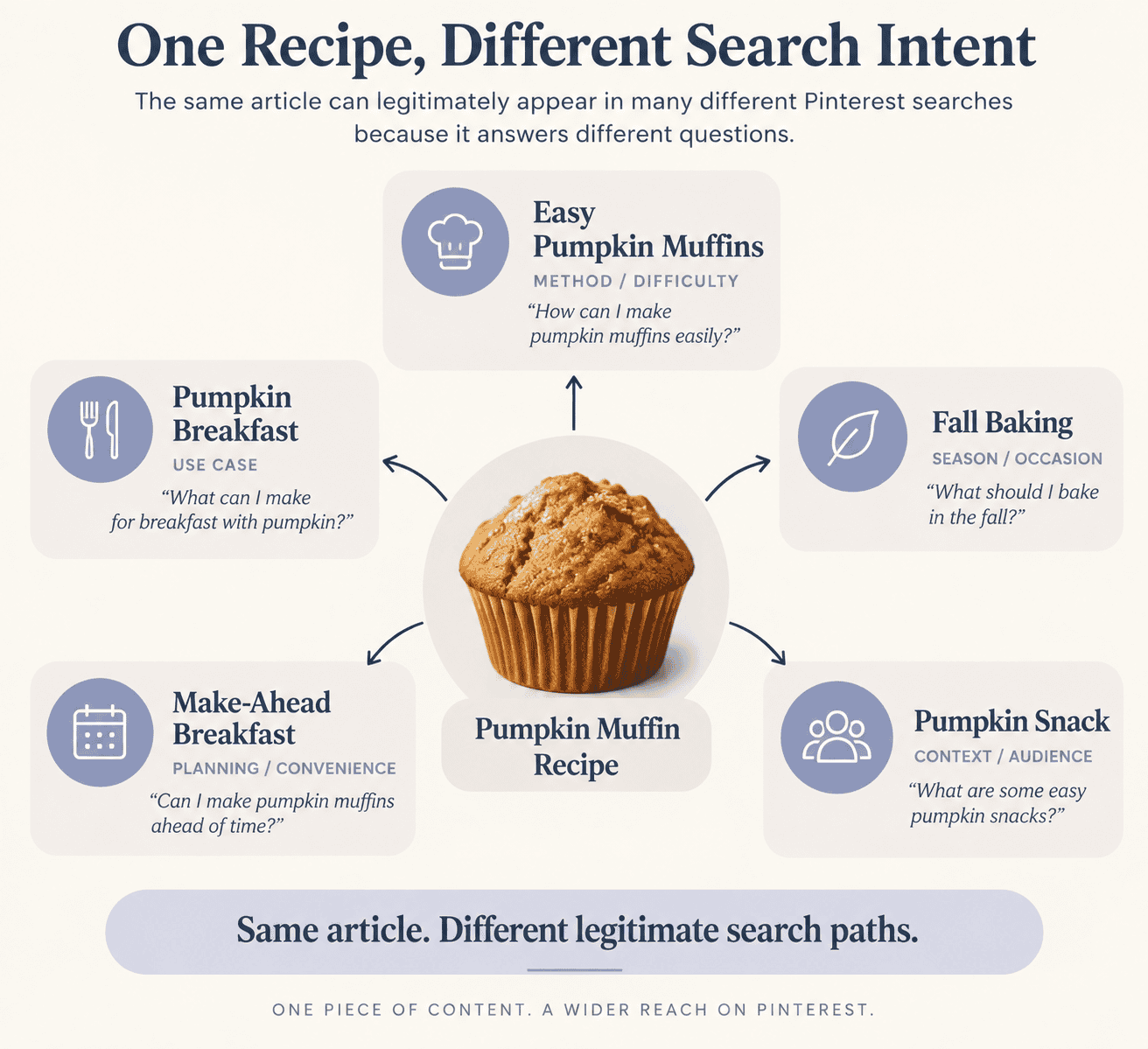
That topic becomes the entity Pinterest can retrieve later when users search. Classification is only the first step. Pinterest still has to determine where that entity belongs within search results before users ever discover it.
Pinterest has also published research describing Query2Interest, a system designed to better understand search intent by connecting user queries with relevant interests. Together, these systems illustrate that Pinterest’s search experience depends on more than keyword matching alone.
Everything else reinforces that understanding.
The stronger the signals remain, the more confidently Pinterest can classify the page.
You can think of a search entity as Pinterest’s working understanding of what a page fundamentally represents. Everything else—keywords, boards, images, descriptions, and user behavior—helps reinforce that understanding.
Every Signal Either Reinforces or Weakens Classification Confidence
Imagine your page consistently communicates the same message.
Your page title references protein pancake bowls.
The headings discuss protein pancake bowls.
The recipe focuses on protein pancake bowls.
The images clearly show protein pancake bowls.
Your pins use overlays describing protein pancake bowls.
Your boards relate to healthy breakfasts and high-protein recipes.
Every one of these signals points toward the same conclusion.
Pinterest gains confidence in its classification.
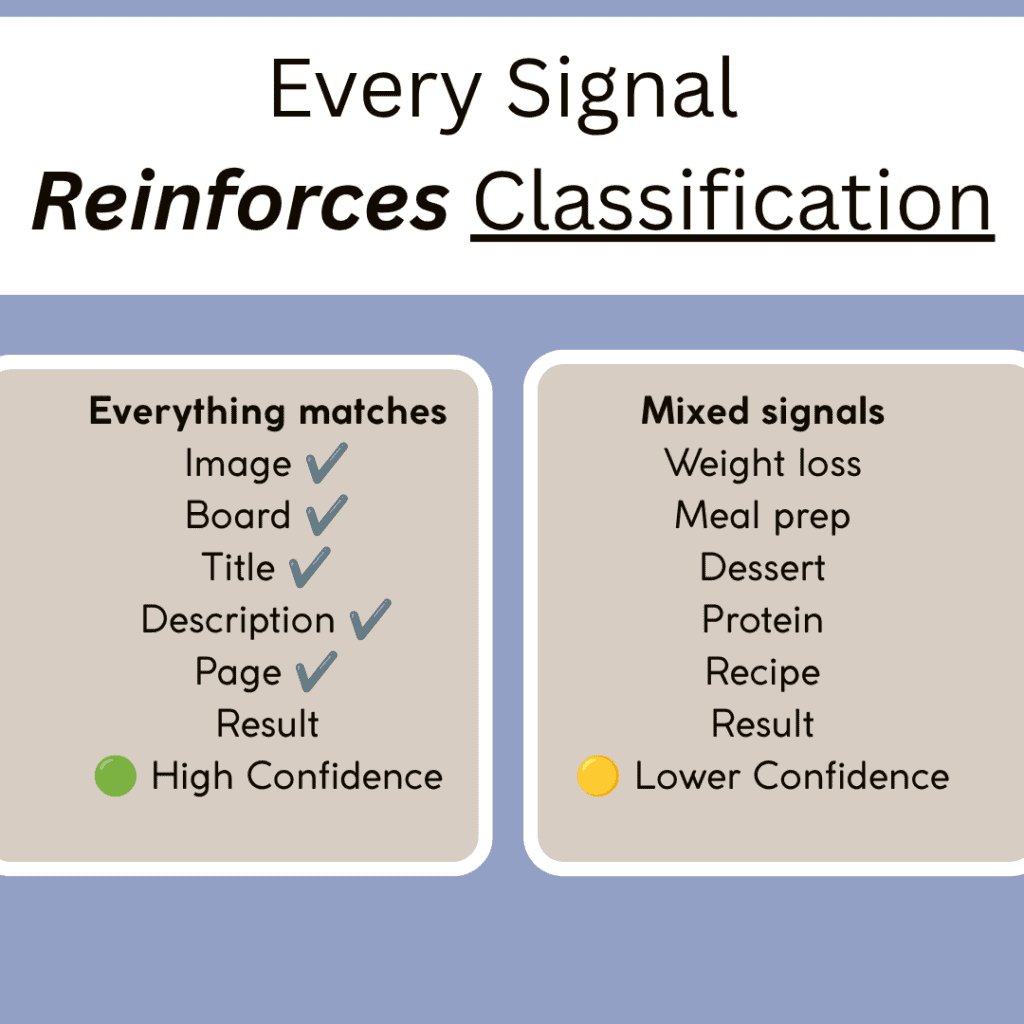
Now imagine the opposite.
- One pin emphasizes meal prep.
- Another emphasizes weight loss.
- Another focuses on cottage cheese.
- Another targets desserts.
The destination page still discusses protein pancake bowls, but the surrounding signals begin pulling Pinterest in different directions.
Pinterest’s confidence in the primary topic becomes weaker. Rather than immediately expanding distribution, Pinterest may continue gathering signals until it better understands where the content belongs.
Pinterest doesn’t necessarily stop distributing the content.
Instead, it may require additional testing before expanding distribution confidently.
Why URLs Matter More Than Individual Pins
A common misconception is that Pinterest ranks individual pins in isolation.
Pinterest is not simply indexing individual pins.
Multiple pins pointing to the same destination help reinforce Pinterest’s understanding of the underlying content over time. Each fresh pin becomes another opportunity to reinforce the classification of the underlying
URL.
This is one reason publishing fresh content consistently still matters, even when you’re promoting older posts. I discuss that process further in Pinterest Growth Timeline: What Actually Matters.
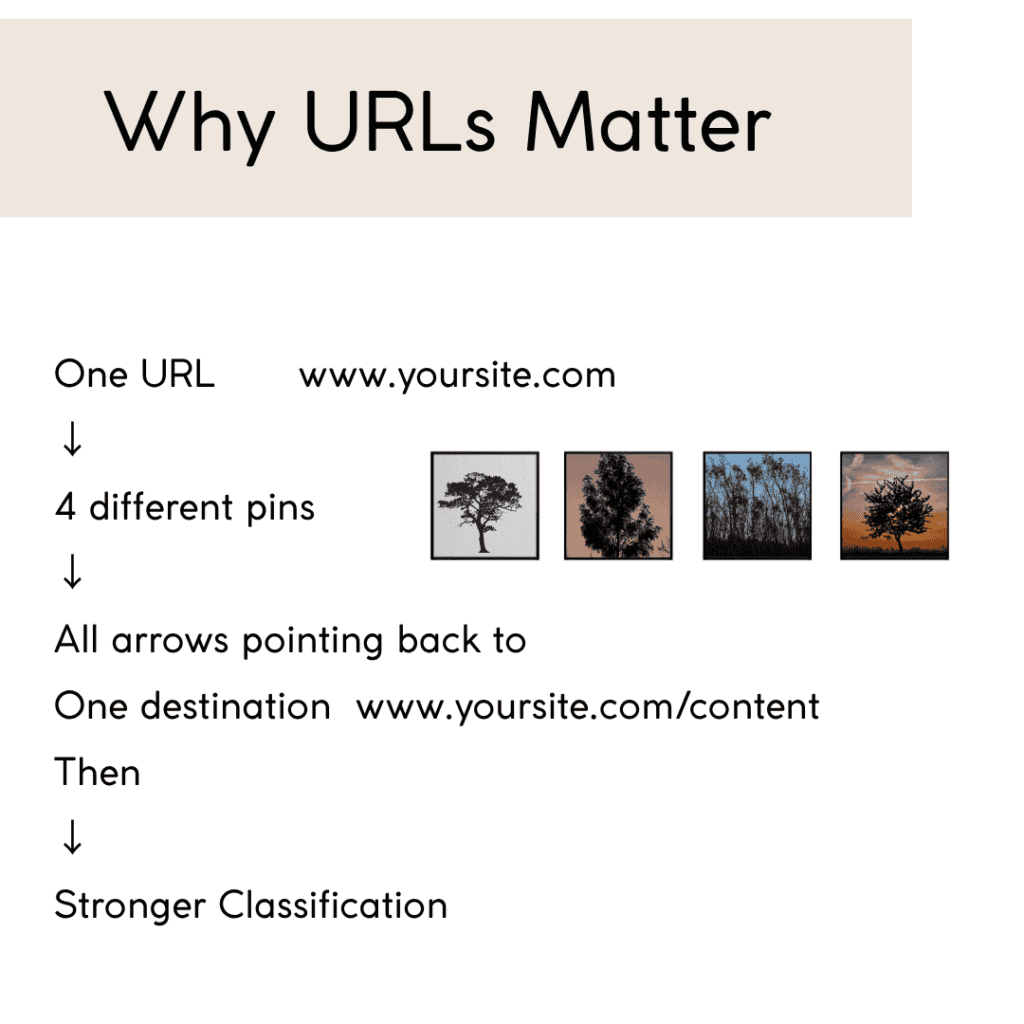
When multiple pins consistently support the same primary topic, Pinterest receives repeated confirmation about what that page represents.
This is one reason fresh pins remain valuable even when promoting existing content.
You’re not simply creating another image.
You’re reinforcing the classification of the destination itself.
Boards Still Matter
If you’re unsure whether your boards are reinforcing or confusing Pinterest’s understanding of your content, my guide to Pinterest Board Strategy for 2026 explains how boards contribute to long-term classification.
Boards are often misunderstood.
They are not merely organizational folders for creators.
They also provide additional context for Pinterest.
A highly specific board reinforces topical understanding.
A broad or unrelated board introduces ambiguity.
For example, pinning a pasta recipe to a board dedicated to Italian pasta recipes provides a much clearer signal than placing the same pin on a generic “Food I Love” board.
Boards do not determine classification on their own. Instead, they provide additional topical context that strengthens—or weakens—the signals already surrounding your content.
Why Consistency Outperforms Creativity
Many creators constantly change overlays, titles, descriptions, and positioning because they worry repetition will hurt performance.
Consistency applies to more than your messaging. Publishing steadily over time helps reinforce Pinterest’s understanding of your content instead of constantly resetting expectations.
In many cases, the opposite is true. Consistent messaging helps Pinterest strengthen its understanding of your content over time.
Creativity still has a place.
Different images, new angles, and fresh pin designs can all introduce additional opportunities for discovery.
But the primary topic should remain stable.
Confidence is not permanent. It is continually reinforced as Pinterest receives additional signals from new pins, updated pages, engagement, and related content.
Consistent signals strengthen Pinterest’s confidence in its classification.
Stronger classification creates the foundation for more consistent distribution.
Classification Is Ongoing
Classification is not a one-time event that happens when you publish a pin.
Pinterest continually receives new information.
- Fresh pins.
- New engagement.
- Updated pages.
- Additional boards.
- User behavior.
As new signals arrive, Pinterest refines its understanding of the content.
Classification is cumulative rather than static. Every additional interaction gives Pinterest another opportunity to confirm—or reconsider—its understanding of a page. Strong, consistent signals reinforce existing classification, while conflicting signals may slow expansion until Pinterest gathers enough evidence to build confidence again.
This is one reason older content can continue improving months after publication.
Why Classification Sometimes Takes Time
Pinterest doesn’t always understand a page immediately.
When new content is published, Pinterest has relatively few signals to evaluate. It can analyze the destination page, images, text overlays, titles, descriptions, and board placement, but those signals represent only an initial snapshot of the content.
As more information becomes available, Pinterest may continue refining its understanding as it receives additional consistent signals. Fresh pins pointing to the same URL reinforce the primary topic. User interactions provide additional context about how people
respond to the content. Updates to the page and related content on your site can also strengthen Pinterest’s confidence in what the page represents.
This doesn’t mean Pinterest completely changes its understanding every time it receives a new signal. Instead, classification becomes more stable as consistent evidence accumulates over time.
That is why some pages seem to gain momentum gradually rather than immediately. If you’ve ever wondered why impressions fluctuate while Pinterest continues learning about your content, Why Your Pinterest Pins Aren’t Getting Views explains several common causes.
It’s not simply because they are getting more engagement—it’s because Pinterest is building greater confidence that it understands what the content is about and who is most likely to find it useful.
For creators, the goal isn’t to chase constant change. It’s to provide clear, consistent signals that reinforce the same primary topic every time Pinterest encounters your content.
What This Means for Your Pinterest Strategy
Successful Pinterest SEO begins long before impressions increase.
Before worrying about clicks or saves, focus on helping Pinterest clearly understand what your content represents.
That means creating consistent signals across your page, your pins, your images, and your boards.
Understanding content classification is the foundation for everything that follows on Pinterest. Once Pinterest understands what your content represents, it can begin determining where it belongs in search, how broadly it should be distributed, and which audiences are most likely to discover it.
Every optimization should reinforce the same answer to one question:
If Pinterest examined every signal associated with this page, would it confidently identify one primary topic?