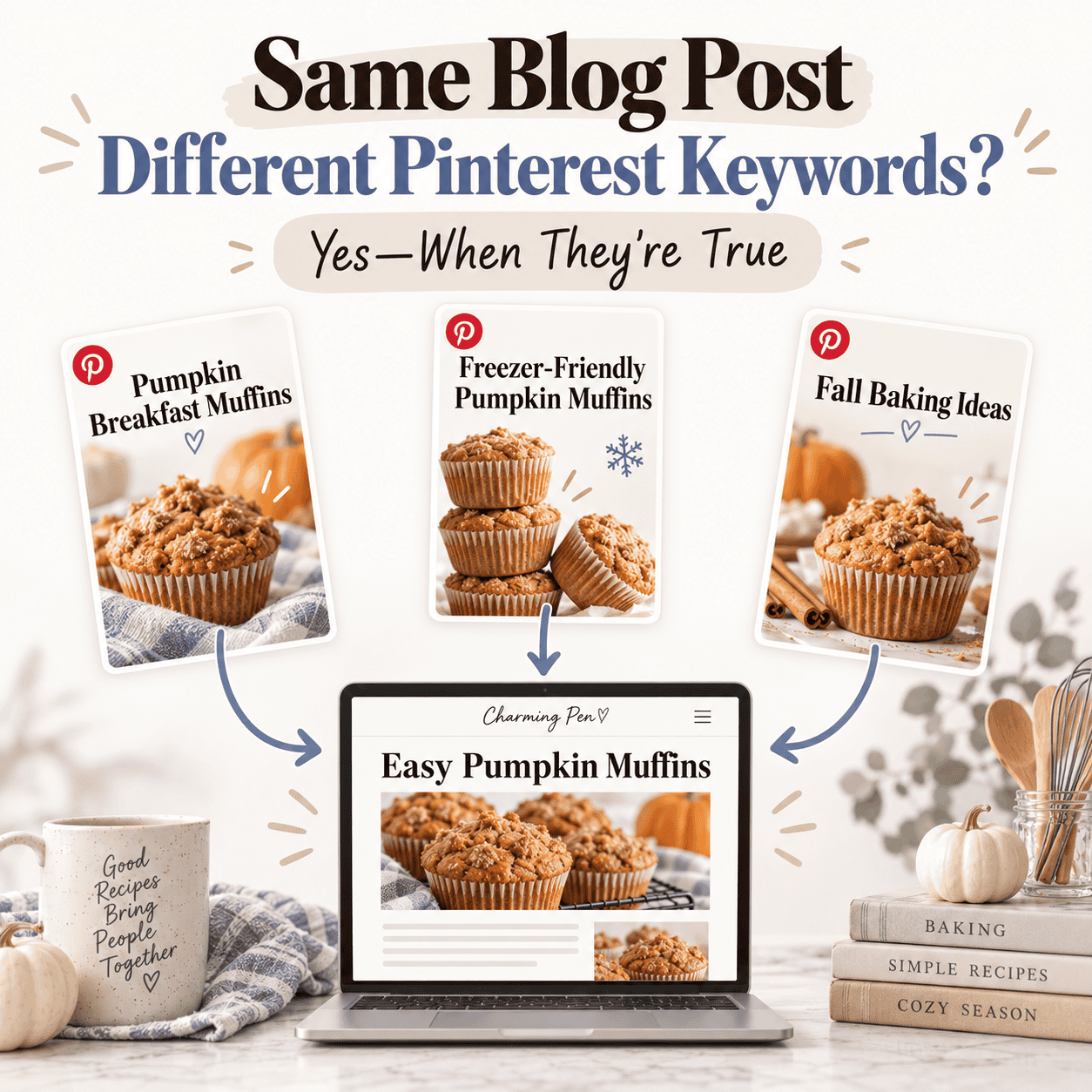
If you create several Pinterest Pins for one blog post, you don’t have to build every Pin around the exact same keyword.
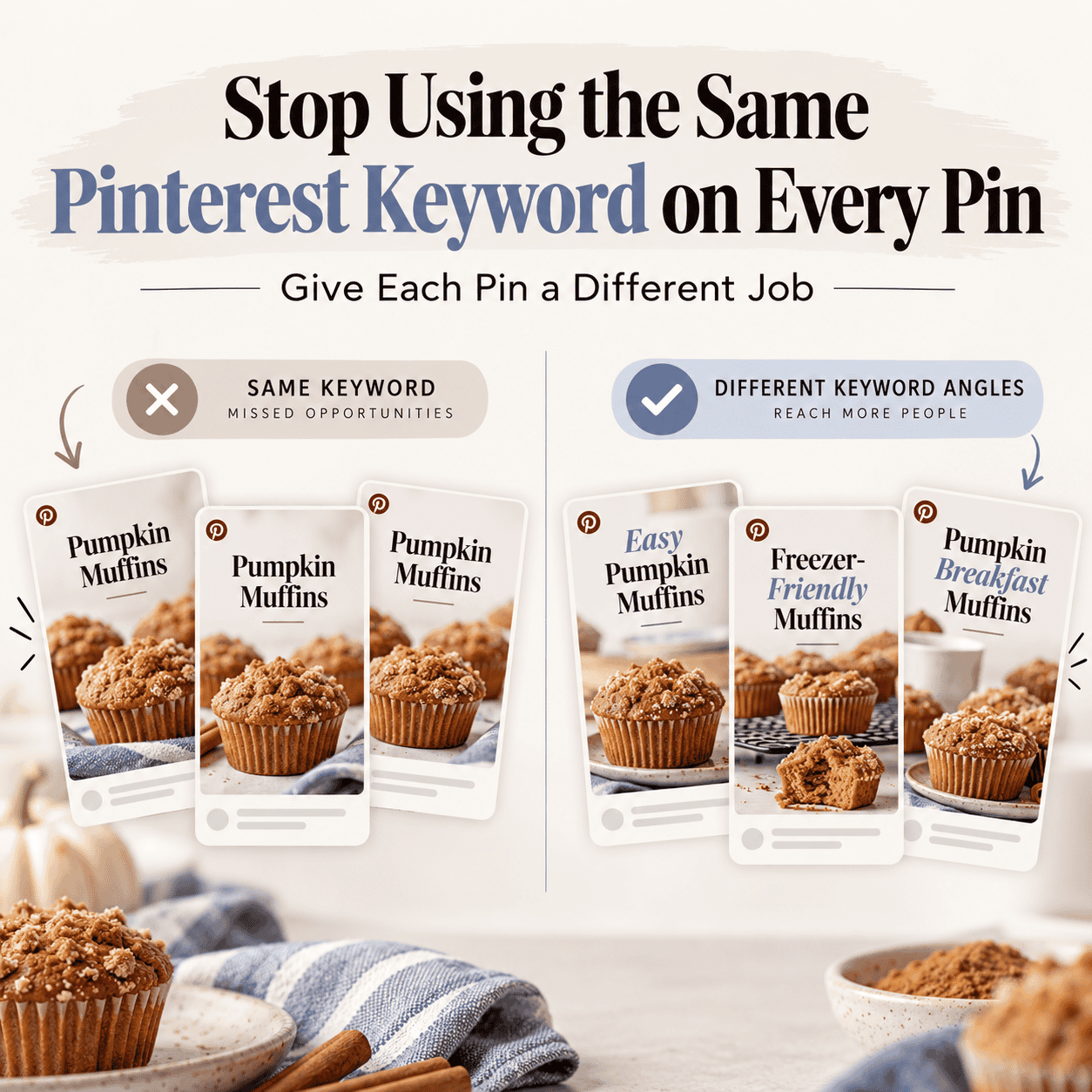
Using the same Pinterest keyword on every Pin isn’t automatically wrong. But if every Pin communicates essentially the same search intent, you’re not giving yourself many different search opportunities to test.
Imagine you’ve written a recipe called:
Pumpkin Muffins
Then you create three Pins:
Pumpkin Muffins
Pumpkin Muffins
Pumpkin Muffins
The graphics may look different, but from a search perspective, all three Pins are doing almost the same job.
A better approach is to keep the article’s identity stable while giving each Pin a different, truthful reason to be discovered.
One Article Can Support More Than One Keyword Angle
Your pumpkin muffin recipe may genuinely work for someone searching for:
- Easy Pumpkin Muffins
- Pumpkin Breakfast Muffins
- Freezer-Friendly Pumpkin Muffins
- Fall Breakfast Ideas
- Recipes Using Leftover Pumpkin Puree
These aren’t just decorative rewrites of the same phrase.
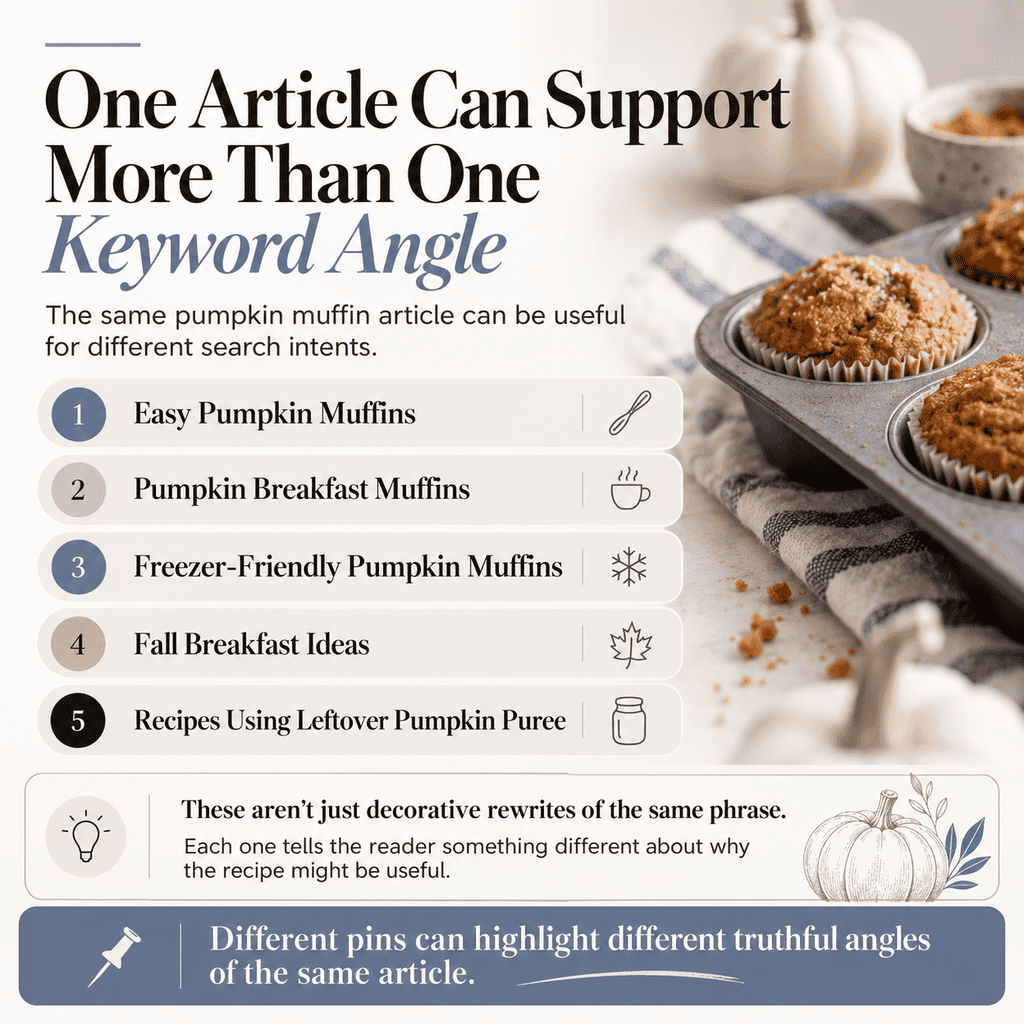
Each one tells the reader something different about why the recipe might be useful.
That means individual Pinterest Pins can emphasize different parts of the same article without changing what the article actually is.
If you’re wondering whether you can use different keywords for Pinterest Pins that all lead to the same blog post, I explain the boundaries separately in my guide to using different keywords for one URL.
Give Each Pinterest Pin One Clear Job
Instead of trying to make every Pin target the full keyword list, choose one dominant angle for each Pin.
For example:
Pin 1 — Easy Pumpkin Muffins
Job: Method
This Pin emphasizes that the recipe is simple and approachable.
Pin 2 — Freezer-Friendly Pumpkin Muffins
Job: Storage and planning
This Pin focuses on the make-ahead or freezer benefit.
Pin 3 — Pumpkin Muffins for Breakfast
Job: Use case
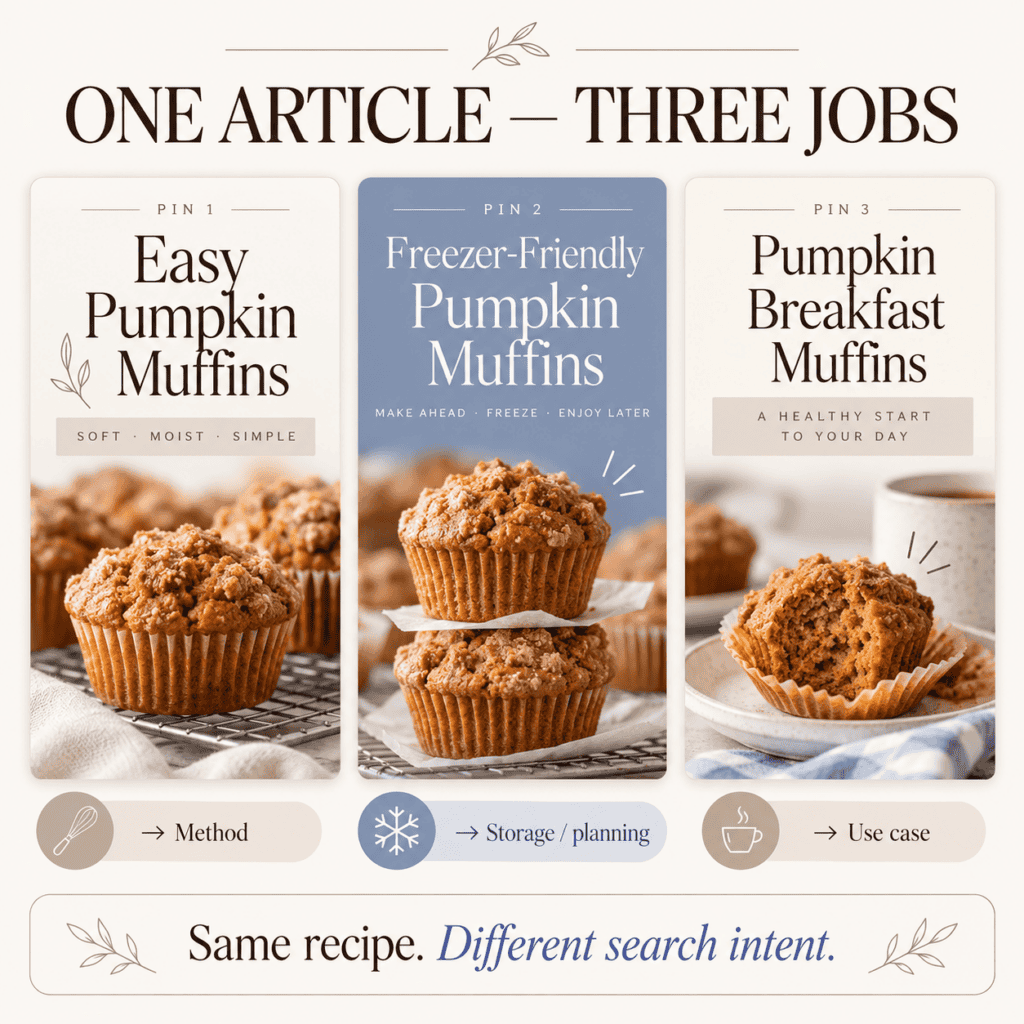
This Pin tells someone where the recipe fits into their day.
All three Pins can still lead to the exact same blog post.
The difference is that each one gives the reader a clearer reason to click.
Pinterest’s own guidance says the imagery, text and keywords used on a Pin should accurately correspond with the landing page people reach after clicking. That gives you the boundary: the keyword angle can change, but the destination still has to deliver what the Pin promised. (help.pinterest.com)
Repeating a Pinterest Keyword Isn’t Automatically Bad
This distinction matters.
You do not need to avoid using your main topic again just because another Pin already used it.
If the article is about pumpkin muffins, phrases containing pumpkin muffins will naturally appear across multiple Pins.
The problem begins when every Pin says essentially the same thing.
Compare:
Best Pumpkin Muffins
Amazing Pumpkin Muffins
Delicious Pumpkin Muffins
Yummy Pumpkin Muffins
Those phrases sound different, but they don’t give someone much additional information.
Now compare:
One-Bowl Pumpkin Muffins
Freezer-Friendly Pumpkin Muffins
Pumpkin Breakfast Muffins
The main recipe identity stays intact, but each modifier adds useful information.
That’s the goal.
Think in Search Intent, Not Just Keyword Repetition
The goal isn’t to avoid repeating words.
The goal is to avoid repeating the exact same search intent over and over.
If one article genuinely answers several different questions or use cases, your Pinterest Pins can reflect those different reasons for searching.
That is also why I wouldn’t stuff every keyword you’ve discovered into every Pin description. One clear dominant idea is usually easier for a person to understand than a Pin trying to represent five different purposes at once.
If you need more alternate angles, my guide on how to find more Pinterest keywords for one blog post walks through the research process.
For the deeper strategy, I explain multiple Pinterest search paths and why one URL can support several distinct but truthful retrieval pathways in One Article, Many Pinterest Search Paths.
For beginners, though, the rule is simple:
Keep the article identity stable. Change the useful reason someone might search for it.
You Asked, Amber Answers
Pinterest advice can get complicated fast. Here are my quick answers to a few of the most common questions around this topic.

Yes—this image was made with AI. As a small business owner wearing a lot of hats, I don’t always have the time to arrange a professional photo shoot, so this is one way I create polished visuals for my business.